no credit card required.no obligation.quick setup.
on — “It's refreshing to use an analytics tool that just works without any hassle.”
“Previously, I had all of my sites hooked up to Google Analytics, like most people. But I never looked at the reports. Now, I find myself dropping in and looking at the stats several times a day. It's very easy to digest and understand.”
“It just works, no need to navigate endless dashboards or worry about compliance issues. That simplicity saves us time and helps us stay focused on building our business.”
Fathom is a great fit for teams that want a minimal, privacy-led analytics product for pageviews, referrers, and goal tracking. It is clear, fast, and easy to adopt.
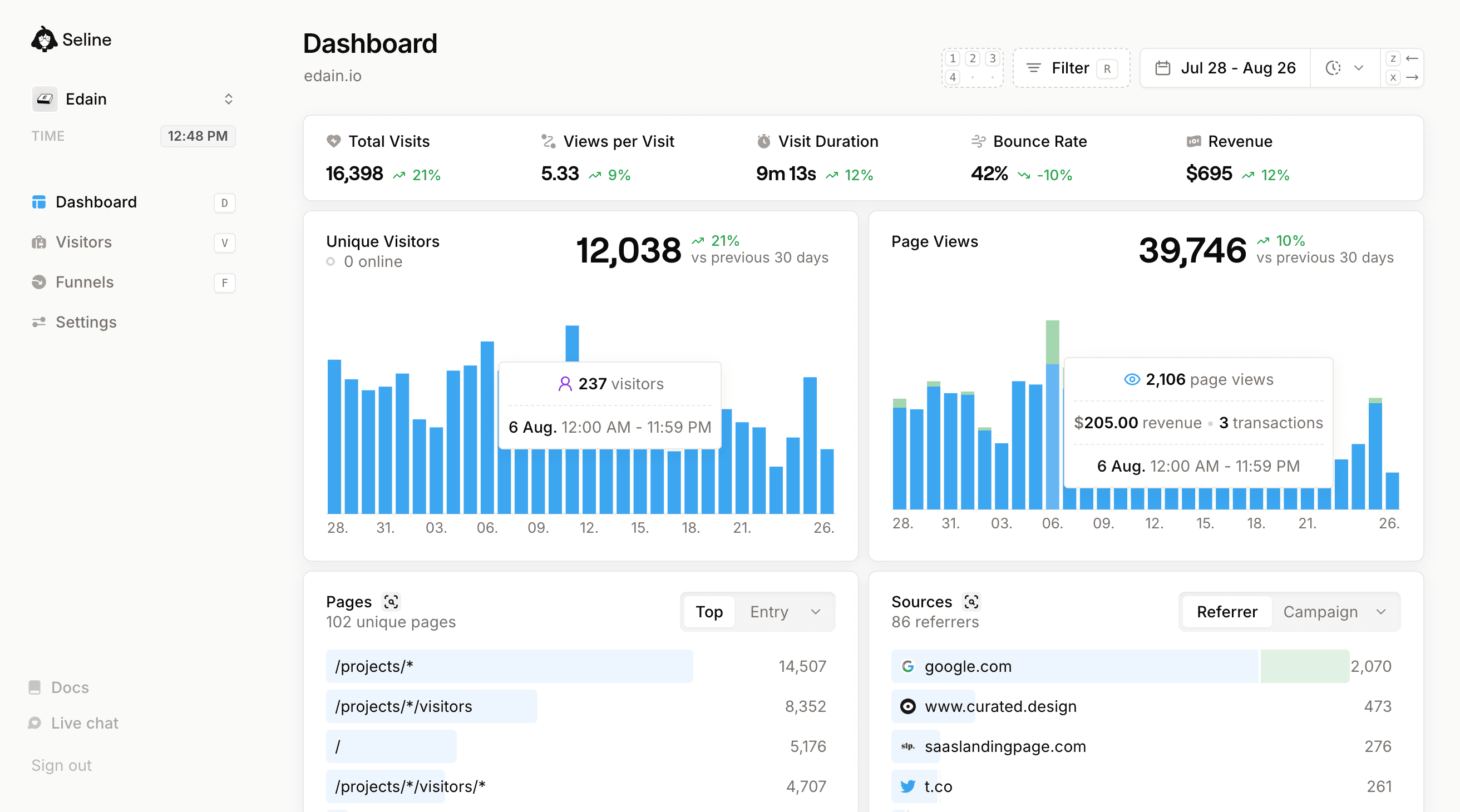
Seline is built for teams that want that same simplicity and more context when needed. You can stay in a simple dashboard view, then drill into journeys and revenue when you have a deeper question.
Simple analytics, optional deeper view
Track traffic first, then open journeys only when needed.
Real-time dashboard
Both tools offer fast, real-time reporting for website performance.
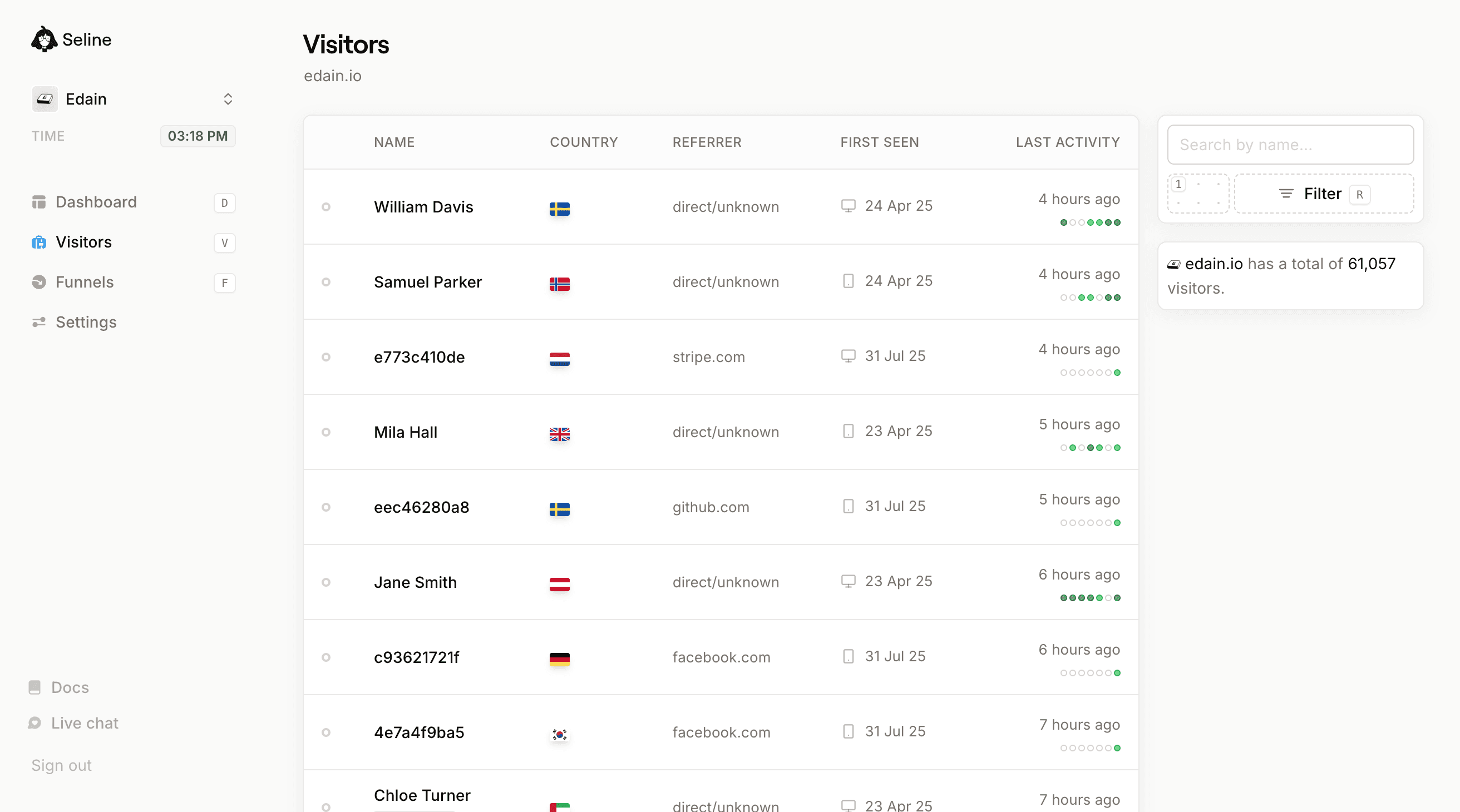
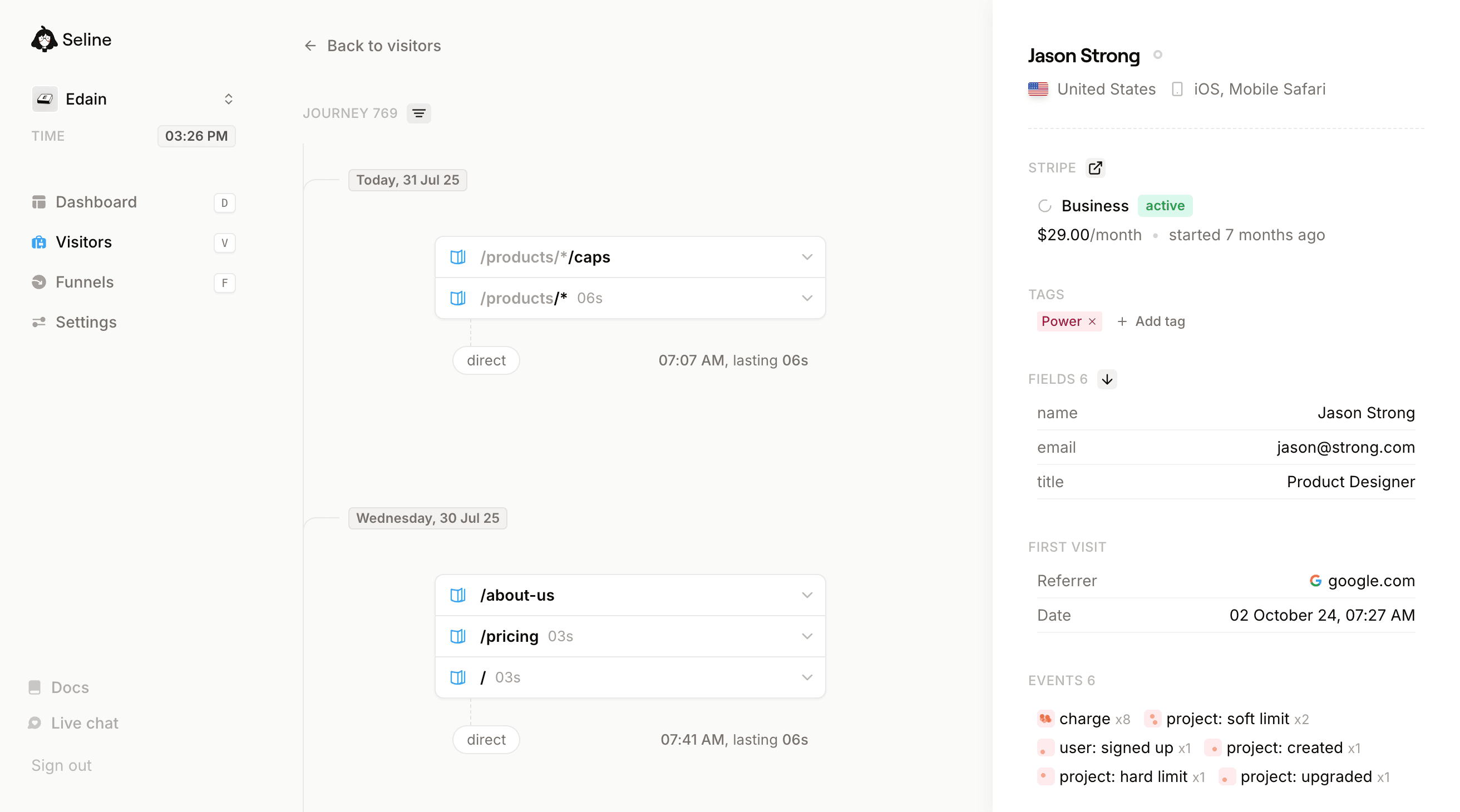
User profiles and journeys
Seline shows person-level paths to conversion. Fathom stays focused on aggregate traffic views.
Revenue analytics
Seline connects channels, pages, and events to revenue. Fathom is built around traffic and goals.
Live view globe
Seline includes a live globe view for visitor activity. Fathom focuses on dashboard reports.
Chat with AI
Seline includes in-dashboard AI chat for analytics questions. Fathom does not include comparable AI chat.
Privacy-friendly tracking
Both tools are privacy-first and built for low-friction compliance.
Simple setup
Both are quick to install with lightweight scripts and clear docs.
Predictable pricing
Both use transparent paid pricing that scales with traffic.
Simple by default, more when needed
Seline stays easy for daily traffic checks and also includes funnels, journeys, and revenue when you want more context.
Use cases where Seline adds more value
Fathom is excellent for understanding what happened on your site: traffic, top pages, and broad campaign movement. That is often enough for teams that only need weekly reporting.
Seline is built for teams that want the same simple dashboard as Fathom plus product and revenue context. You can start with aggregate views, then open funnels, profiles, and attribution when traffic alone is not enough.
Revenue tracking and attribution
optional
Fathom shows traffic and goals. Seline adds revenue attribution by source, page, and campaign so you can see what brings paying users, not only visits.
Sources
6 referrers
Visitors
Revenue
google.com
1,840
$12,480$12,480
chatgpt.com
620
$8,210$8,210
reddit.com
1,150
$4,390$4,390
duckduckgo.com
410
$0$0
x.com
930
$1,260$1,260
bing.com
380
$640$640
Profiles, churn analytics
optional
Fathom stays on aggregate reporting. Seline lets you identify users, segment healthy and at-risk accounts, and catch churn signals before they affect revenue.
Martha Falls
Sweden
,
FIELDS 6
Plan
Free
Company
Falls Inc
Role
Marketing
Bruce Wayne
United States
,
FIELDS 6
Plan
Pro
Company
Wayne Corp
Role
Engineering
Funnels
optional
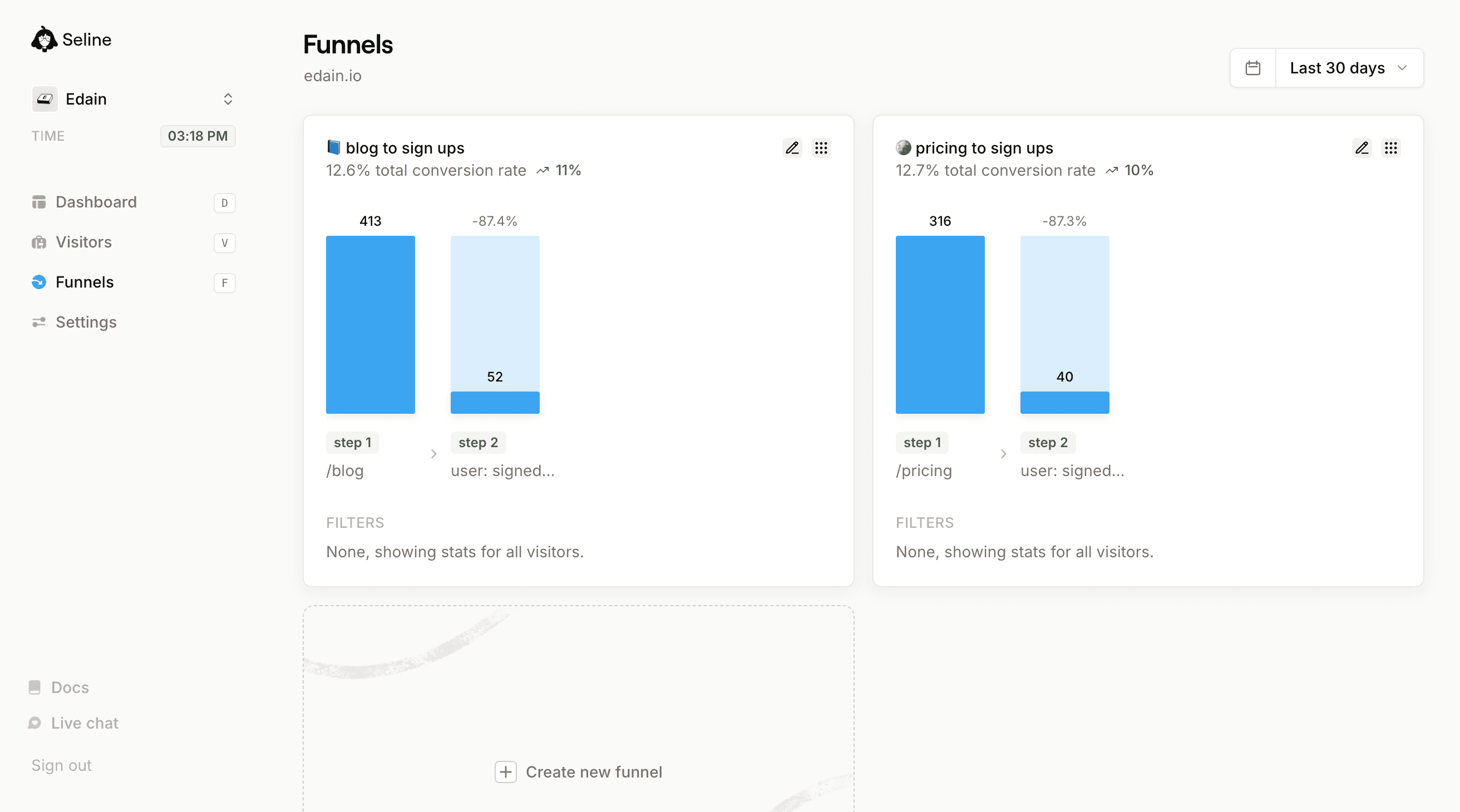
Build multi-step funnels in minutes and find exactly where people drop between landing, signup, activation, and purchase.
6.46.4% total conversion rate
chatgpt.com
640640
288288
-55.055.0%
4141
-85.885.8%
step 1
/blog/*
step 2
user: signed up
step 3
project: upgraded
FILTERS
chatgpt.com
Chat with AI
no setup required
Ask questions like "why did conversions drop this week?" and get fast answers from your data without building custom reports.
C
78 messages left
How to choose between Fathom and Seline
Pick Fathom when your team wants a fast, low-maintenance dashboard for traffic trends and goals, and you do not need to investigate individual user paths. It is strong for simple reporting and quick weekly check-ins.
Pick Seline when you want to keep analytics simple today and still be ready for deeper growth questions tomorrow. The day-to-day workflow stays lightweight, with extra context available when you choose to use it.
Choose Fathom if...
You only need aggregate web analytics.
You track a small set of goals.
You do not need user-level journey analysis.
Choose Seline if...
You want a simple dashboard for day-to-day checks.
You optimize signup or purchase funnels.
You need channel-to-revenue visibility.
You want optional depth without extra complexity.
Fast migration plan
Install Seline script.
Recreate your key goals as events.
Run both tools for 1-2 weeks, then switch fully.
Have any questions or need help setting up or migrating?
Feel free to reach out to us via Done-for-you setup and migration services available.
What changes after moving from Fathom
Day 1
Familiar dashboard
You still get the same fast daily checks for sessions, pages, sources, and events. Teams can migrate without changing their routine.
Week 1
Clearer conversion flow
As events settle, funnel and journey views make it easier to explain conversion swings and identify practical fixes.
Month 1
Better growth decisions
Revenue-linked analytics help marketing and product teams align around outcomes, not just traffic volume.
Pricing
Fathom keeps pricing simple and predictable with plans tied to monthly traffic. For teams that only need traffic reports, this model is straightforward and easy to budget.
Seline follows the same transparent pricing philosophy and keeps core analytics easy from day one. The difference is that teams can also use funnels, profiles, and revenue attribution without introducing a second analytics stack later.
Depth of insight
Fathom gives a clean high-level view of website performance: pageviews, referrers, and goals. It is strong for teams that mainly review trend lines and campaign snapshots.
Seline adds user profiles, journey timelines, funnel dropoff analysis, and revenue context. This helps teams move from reporting traffic to understanding which actions improve activation, conversion, and retention.
Privacy and compliance
Both products are privacy-first and avoid invasive tracking patterns, making them strong alternatives to traditional cookie-heavy analytics tools.
Seline is cookieless and stores data in the EU to support teams with strict GDPR requirements. This gives EU-focused teams a practical path to keep compliance simple while still tracking meaningful product and marketing outcomes.
Setup
Both tools are quick to launch. Add one script and start seeing real-time traffic and event data within minutes.
Seline setup guides cover major frameworks and custom events without extra complexity, so teams can start simple and expand tracking depth only when they need more analytical context.
Performance
Fathom and Seline both use lightweight scripts designed for strong performance and low overhead.
For SEO-conscious teams, both are strong choices compared with heavier analytics suites. Seline keeps that same lightweight footprint while offering deeper analysis layers when required.
When Fathom fits best
Choose Fathom if your main need is clean traffic reporting and simple goal tracking, and your team rarely needs user-level or revenue-level diagnostics.
Choose Seline if you want simple analytics first, plus journeys, funnels, and revenue attribution when needed. This is especially useful for SaaS and product teams that optimize conversion every week.
Support
Seline support is handled by the core team, so product and tracking questions get direct, fast answers.
Teams migrating from Fathom often use this direct support to map goals to events, validate data quality, and shorten the time to first useful insights.
Fathom vs Seline FAQ
For most teams, yes. You can install one script, recreate key events, and start seeing traffic, conversion, and revenue data quickly.
Yes. Seline is cookieless, privacy-first, and stores data in the EU so teams can keep analytics compliant without adding friction.
Seline adds user-level journeys, funnel analysis, and revenue attribution so you can connect marketing and product decisions to outcomes.
Yes. Seline works great as a simple dashboard too, so you can keep a lightweight workflow and still have extra features available when needed.
Yes. Both products let you track key actions. Seline also helps you connect those events to journeys, funnel steps, and revenue outcomes.
Yes. Most teams run both tools briefly, compare traffic and event numbers, and then finish the move once dashboards align.
Fathom is great for high-level traffic tracking. Seline is often a better fit for SaaS teams that need to understand signup flow, activation, and paid conversion.
No. The core dashboard stays simple. Advanced views like journeys and funnels are optional, so teams can keep a lightweight workflow and dive deeper only when needed.
Switch from Fathom without losing simplicity. Keep it simple, with deeper insights when you need them.
Install Seline in minutes and start with a clean, simple dashboard.


 — “It's refreshing to use an analytics tool that just works without any hassle.”