SaaS analytics that covers marketing, product, and revenue


These are the questions SaaS teams ask us on their first call. Each one is a job Seline ships with, so there are no custom dashboards, no SQL, and no analytics engineer required.
Start with the workflows you need most, then add the rest when you are ready.
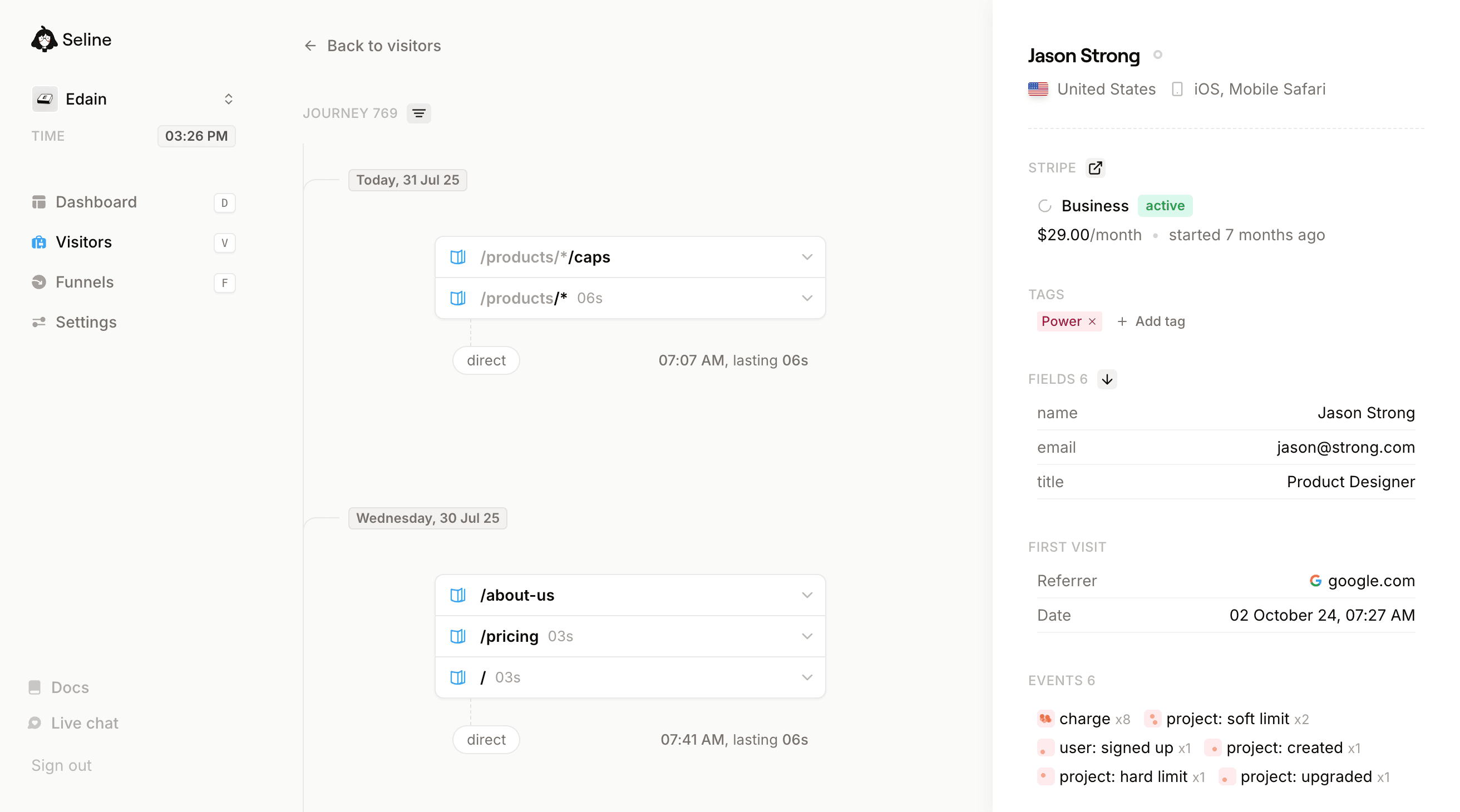
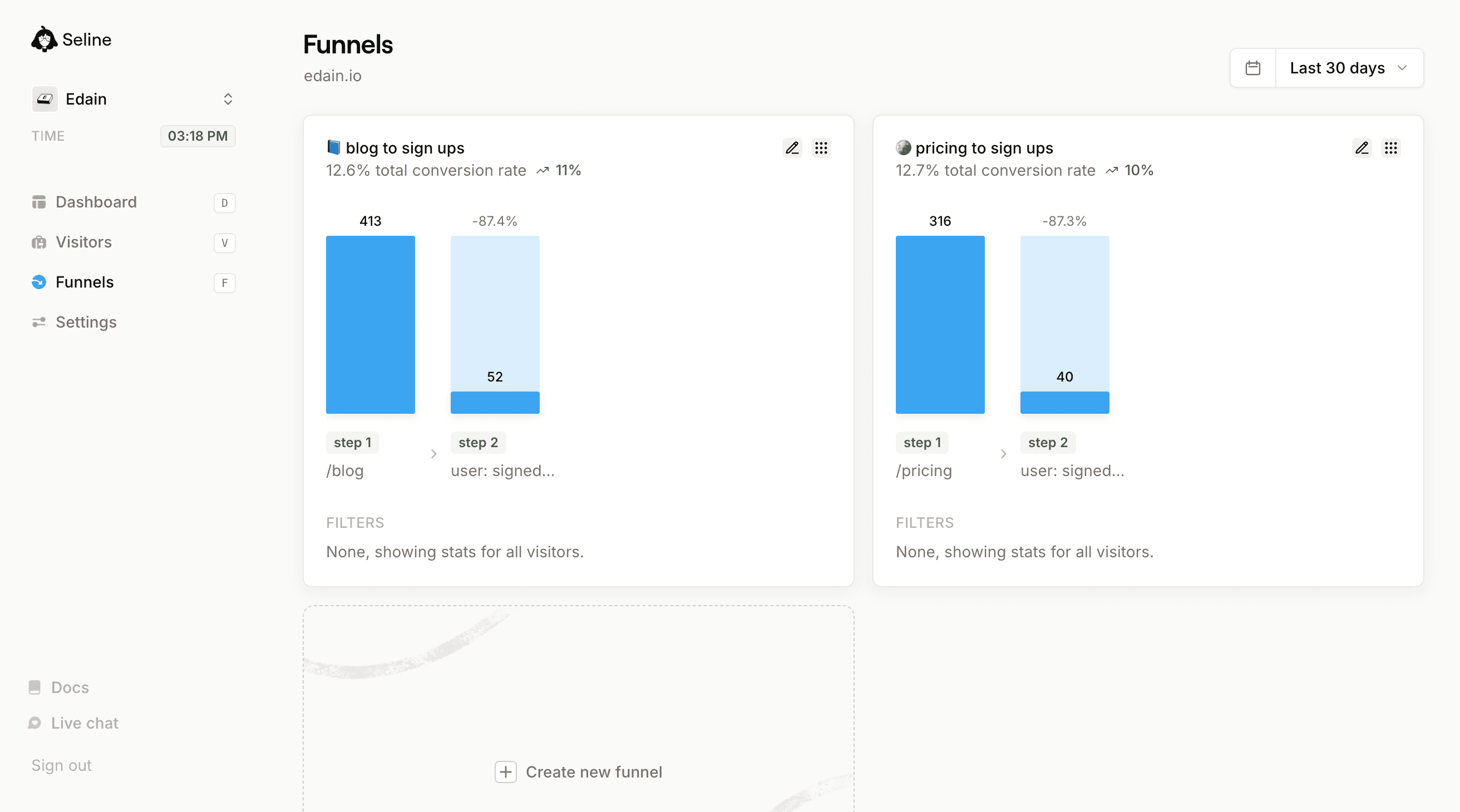
Build the funnel that defines your SaaS. See drop-off at every step, compare last week to this week, and jump into the journey of any dropped user in one click to understand exactly why.
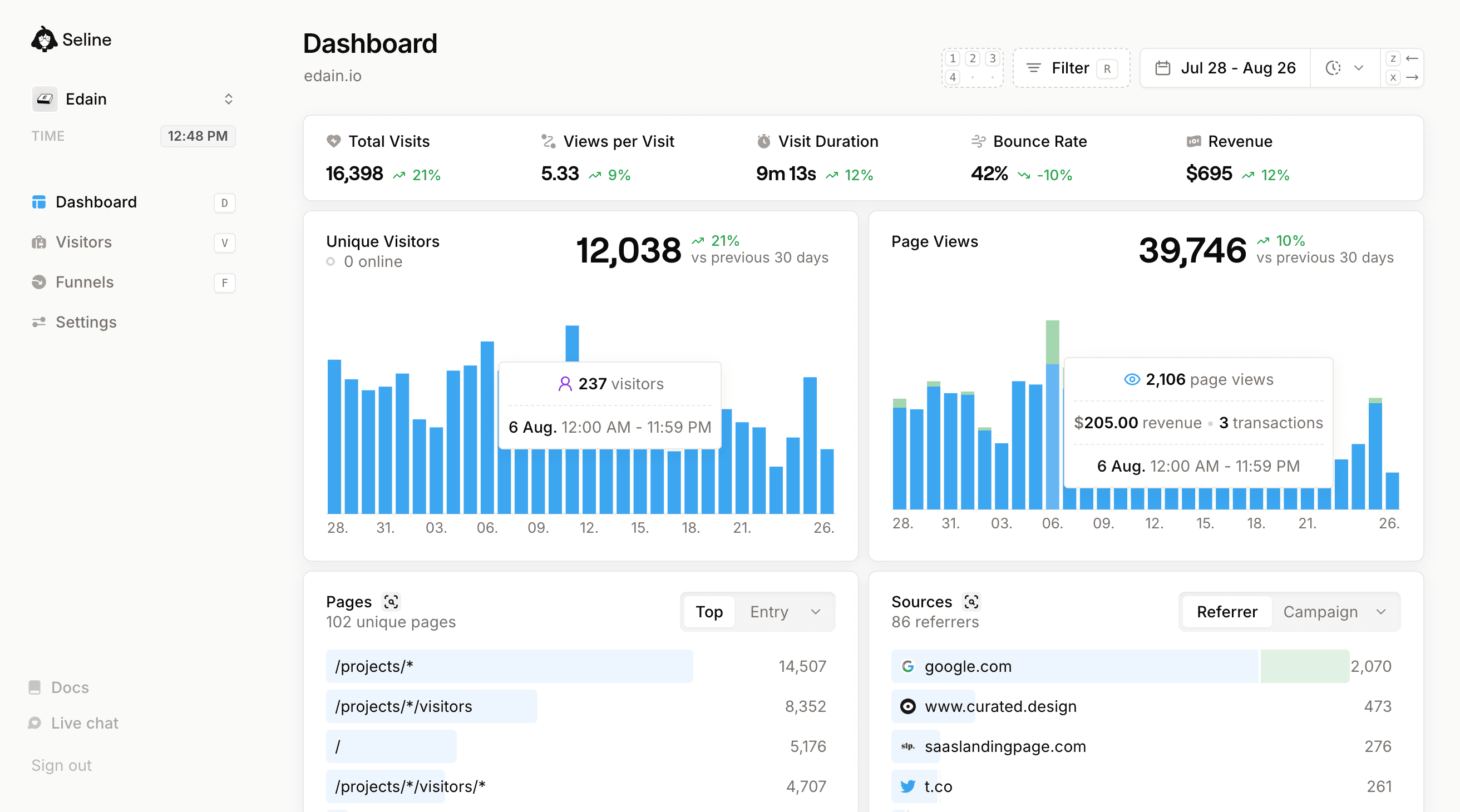
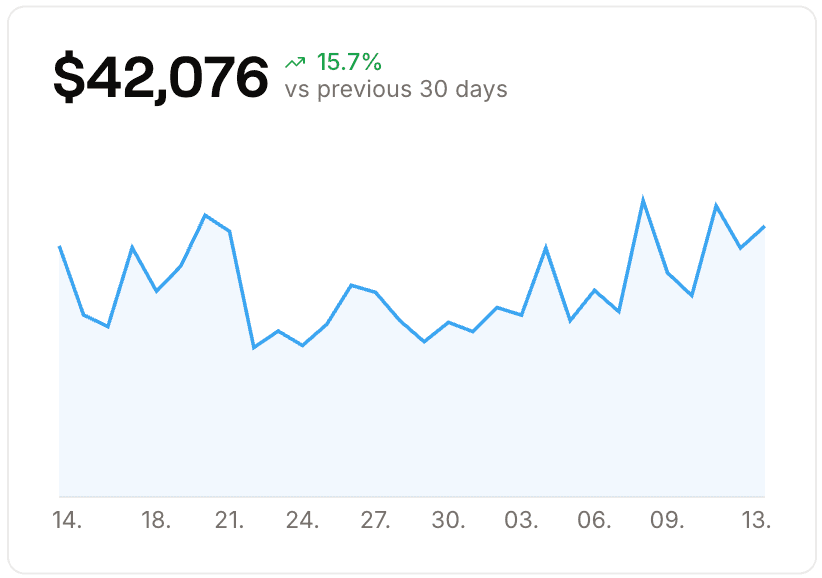
Stop reporting on signups. Connect Stripe and watch which UTMs and referrers actually bring paying customers, and which channels bring users who churn quickly.
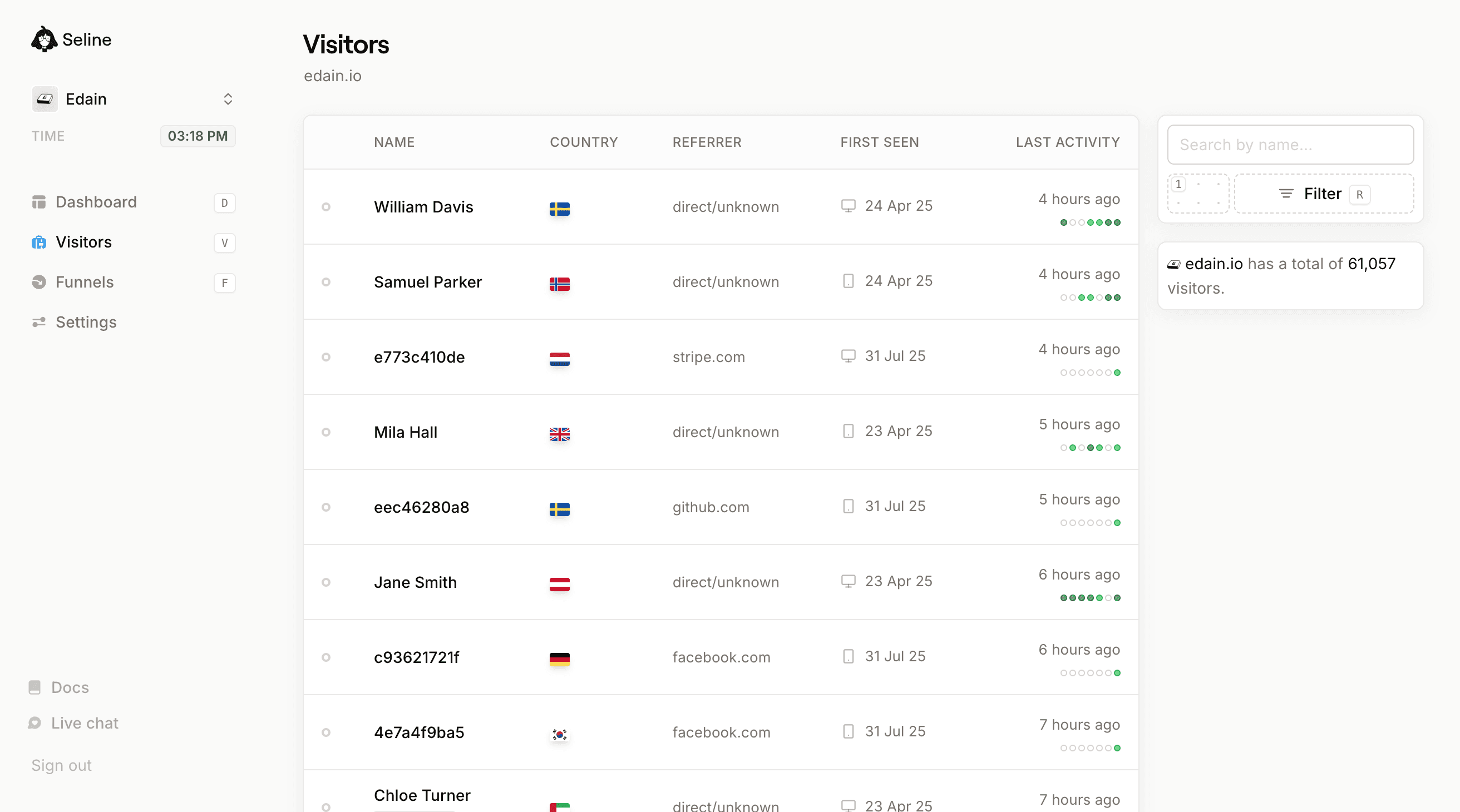
Search any user by email and see every session, page, and event they ever fired. Helpful for support tickets and for sales before a renewal call.
Build a segment of paying users who have not fired your key events in 14 days. Route the list to CS or trigger a win-back email before they cancel.
Most SaaS teams split this work across Google Analytics on the site, Mixpanel or PostHog in the app, and Stripe in another tab. The founder then rebuilds the picture in a spreadsheet. That stack answers questions, but only after someone joins the numbers by hand.
A SaaS analytics dashboard should show four things together: where traffic comes from, which signups activate, which campaigns produce MRR, and which users are going quiet. If a tool cannot tie a UTM click-through to a payment status, it is still a traffic report.
Seline is built for that join. The same workspace tracks pages and sources on the marketing site, profiles and funnels in the product, and Stripe charges as revenue events. Ask the AI chat "what is our weekly retention by plan?" instead of writing SQL.
Read the longer explainer in what SaaS analytics is and product analytics. If you are still early and the founder is the whole data team, analytics for startups is the closer fit.

The share of new accounts that reach the aha moment. If this drops after a release, the onboarding change is the first place to look.
Trials that convert. Pair it with time-to-value so you know whether pricing or product is the leak.
Which sources produce revenue that sticks. Signups from a channel that churns in week two are not a growth engine.
Whether users find the parts of the product that create value. Track this with custom events, not pageviews alone.
Paying users who have gone quiet. A 14-day drop in key events is usually visible before the cancel email.
Plan changes and cancellations, tied back to the journey that led there. Revenue without this context hides the real trend.
Strong event analytics. Heavier taxonomy work, and pricing that often scales with monthly tracked users. Seline keeps the same primitives (events, profiles, funnels) on one predictable plan.
A wide product suite, including flags and experiments. More surface area than most teams need for analytics alone. See PostHog vs Seline.
Built for larger product orgs. Powerful, and usually more process than a small SaaS wants. See Amplitude vs Seline.