Analytics for startups without the heavy setup


You do not need every feature on day one. Pick the two or three that hurt most. They map directly to the places early-stage startups feel blind.
The rest of the toolkit sits there waiting, on the same plan, with no migration when you outgrow your starting setup.
Ship a couple of versions, watch which one converts signups, and keep the winner. Real-time numbers mean you do not wait a week for GA to update before making a call.
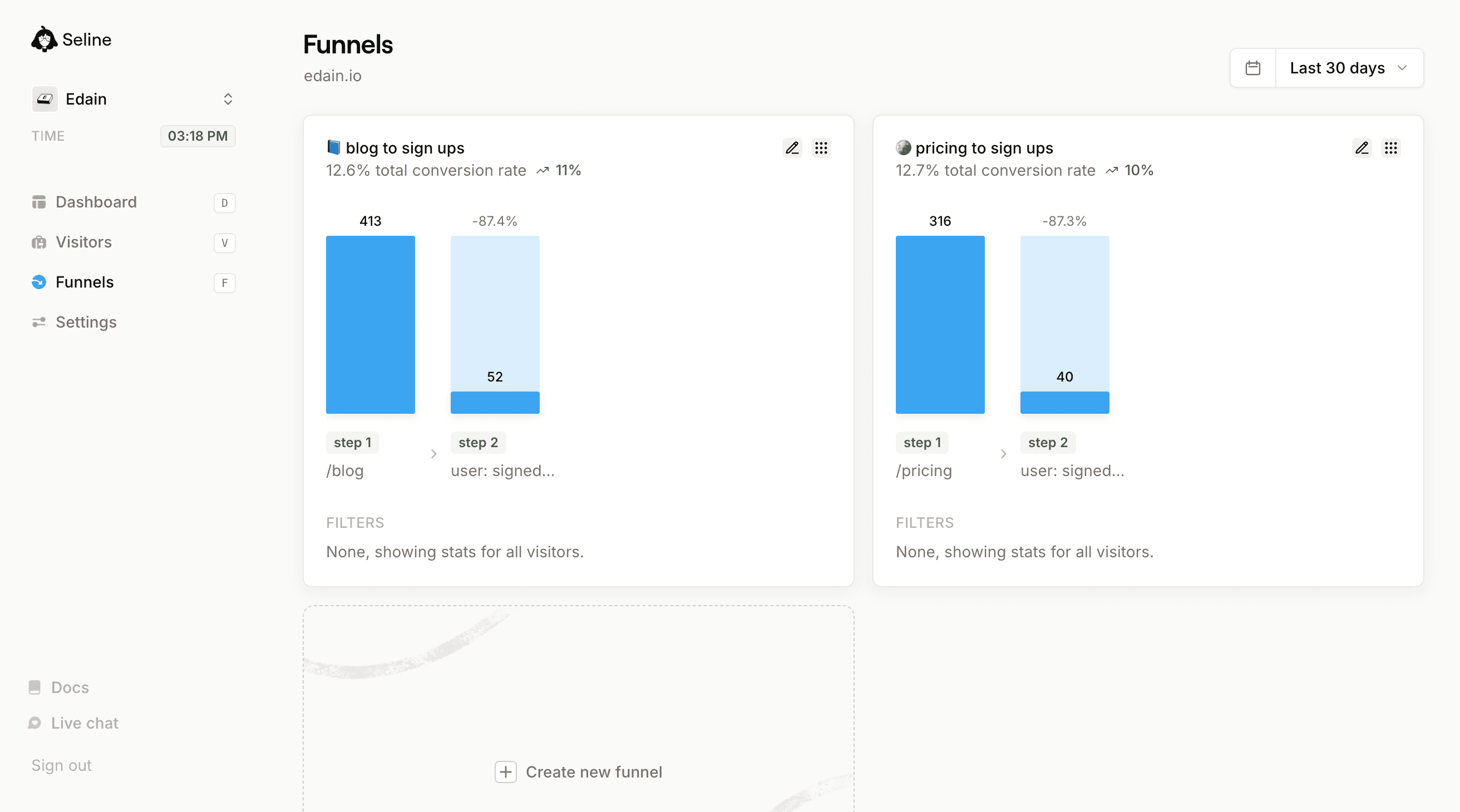
Build a funnel from /pricing to /sign-up to activation. The biggest drop-off step is an obvious place to focus your next sprint.
Connect Stripe and see which referrers and UTMs bring real revenue. The list is often shorter than you expect, which helps you focus spend.
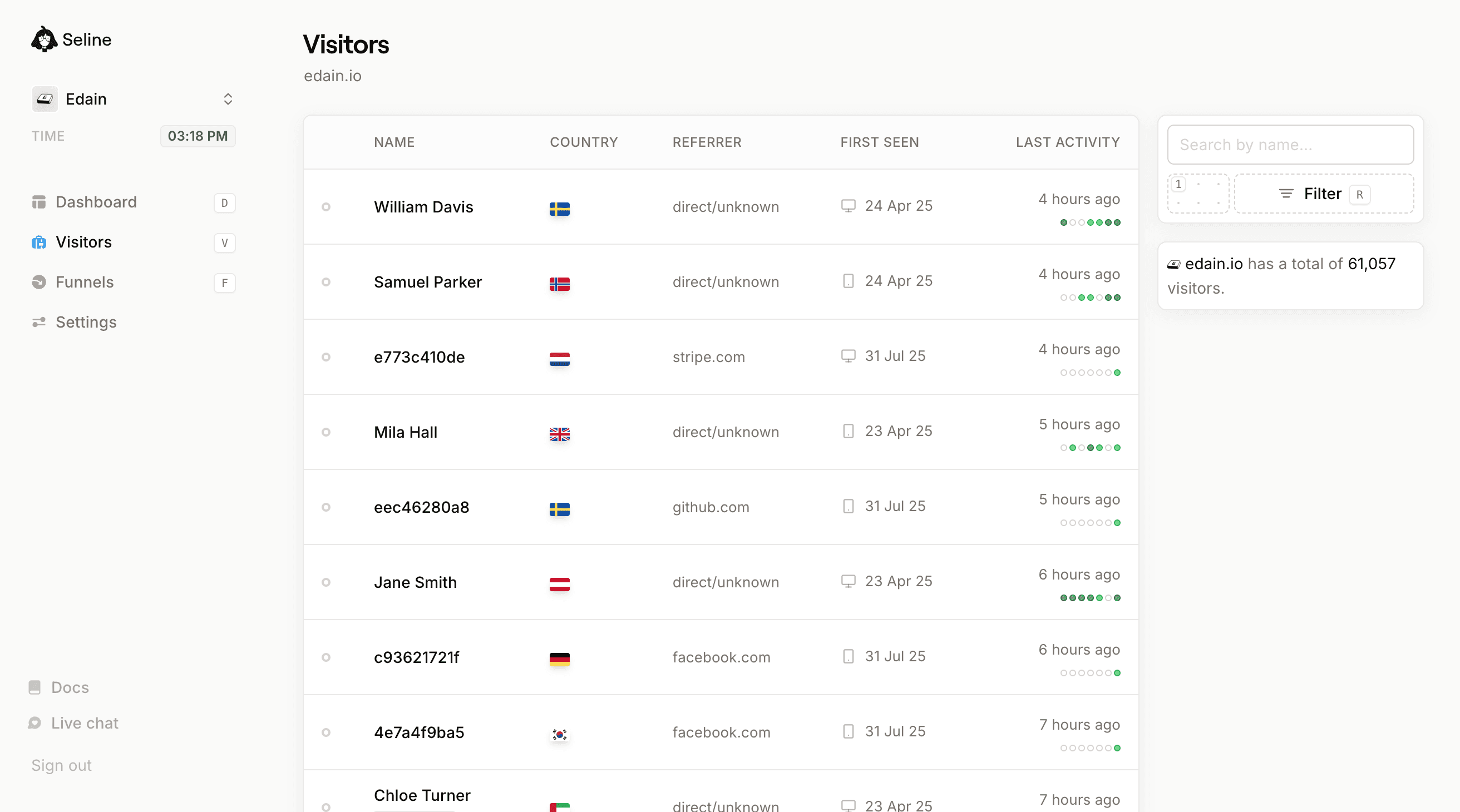
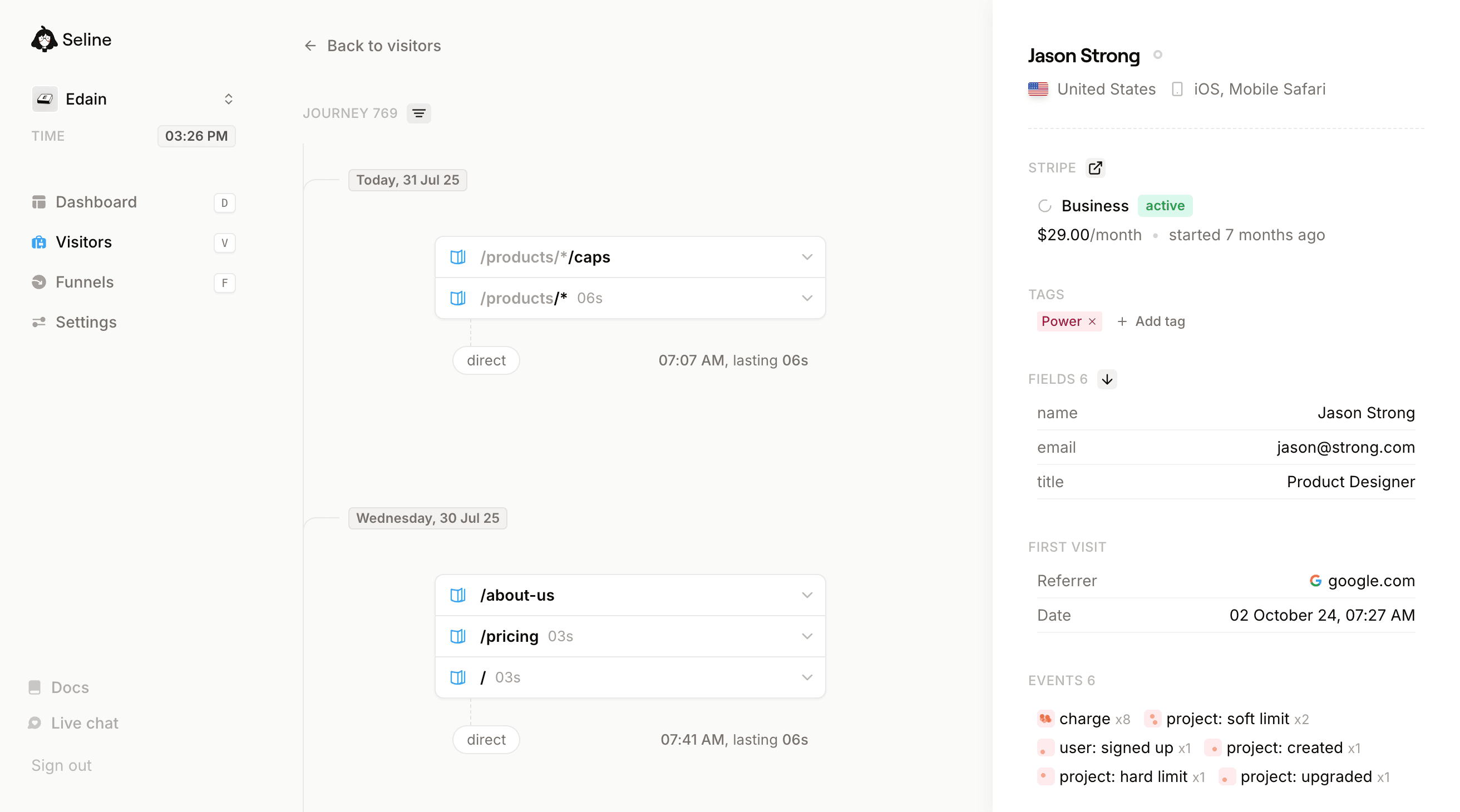
Profiles let you find users who actually used a new feature. DM them, invite them to a call, and build the next iteration from what they actually did.
Most early-stage teams start with Google Analytics because it is free. Then they spend weeks configuring events and still cannot answer a simple question: did this landing page bring paying users? Product tools like Mixpanel or Amplitude can answer that, but they take setup time and the bill often grows with tracked users.
Lightweight pageview tools stay easy, then you outgrow them the week you need a signup funnel. A useful startup analytics platform sits in the middle. Fast to install, readable without SQL, and deep enough that you do not migrate at Series A.
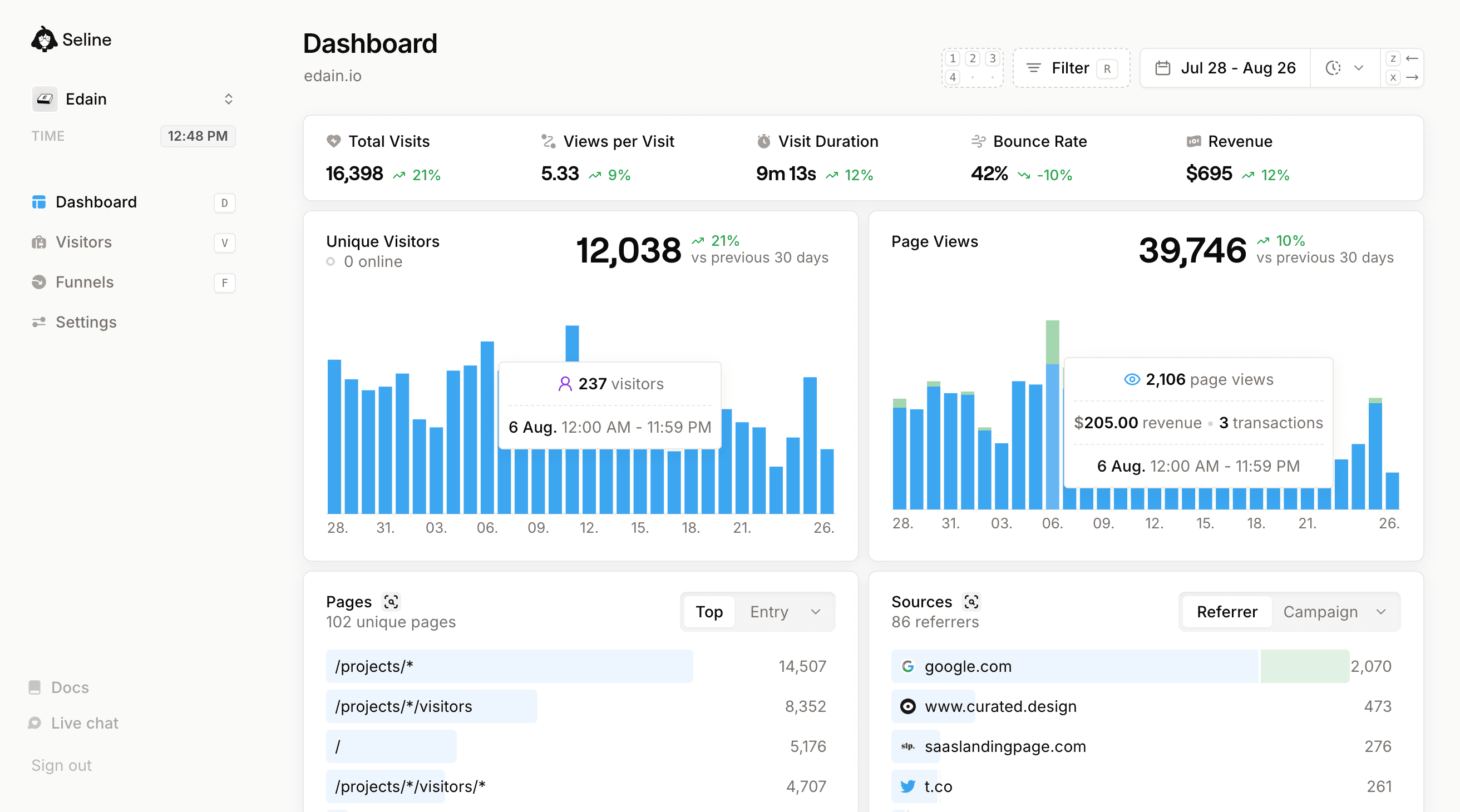
Seline is that middle. Add a ~2kb script, open a dashboard, and the same plan already includes funnels, profiles, journeys, Stripe revenue, and an AI chat. That is the toolkit founders usually piece together from three products.
It is a fit if you are pre-PMF or just past it, you are the analytics team, and you want one plan from $9/month instead of a stack. If you already run a data team on a warehouse-native stack, you probably want something heavier.

Visitors to signup, by page and by source. If a page gets traffic and no trials, the offer is the problem, not the ads.
The share of signups who hit the moment that predicts retention. This is usually a better PMF signal than raw signup volume.
How long it takes a new user to reach that moment. Shorter is almost always healthier at the early stage.
Which referrers and UTMs produce paying users, not just clicks. This is how a small budget stays pointed at work that compounds.
Who came back after week one. A rising retention curve is a stronger story than a rising top-of-funnel chart.
The last leak before revenue. If this number is stuck, look at onboarding and pricing before you buy more traffic.
Free and familiar. Slow to set up for a founder, incomplete when a cookie banner is on, and weak at signup-to-paid without extra wiring. See GA vs Seline.
Fast and privacy-friendly. Fine for pageviews. Thin once you need activation funnels, user profiles, or Stripe revenue. See Plausible vs Seline.
Deep product analytics. More setup than most seed teams want, and Mixpanel-style pricing often scales with tracked users. See PostHog vs Seline.