10 Best Google Analytics Alternatives for 2026 (Compared)
Google Analytics has been the go-to web analytics tool for more than ten years. According to W3Techs, it still appears on about 44% of all websites, holding around 79% of the market share among sites that use a recognized analytics tool. If you manage a website, chances are you've either installed it yourself or taken it over from the person who created the site.
But in 2026, more teams are actively looking for a Google Analytics alternative. Not because GA4 is bad, but because it often feels like the wrong fit.
The interface is dense. Setup takes longer than it should. Privacy rules keep shifting. Cookie banners frustrate visitors. And answering a simple question like "which page drove the most sign-ups last week?" can mean clicking through five reports.
This is why privacy-focused tools are becoming increasingly popular. Options like Plausible, Fathom, Simple Analytics, and Seline (which I developed) eliminate the unnecessary complexity, avoid invasive tracking, and provide the essential metrics you need without a lengthy learning curve.
In this guide, I compare the best Google Analytics alternatives for 2026. I'll start with Seline, then walk through the other tools I'd recommend and when each one makes sense.
TL;DR: Best Google Analytics Alternatives
Here's the short list if you're deciding today:
- Seline — My pick. Modern, clean UI. Fastest dashboard in this list. As simple as Plausible out of the box, with optional extras when you need them.
- Plausible — Best open-source option. Lightweight, cookieless, and self-hostable if you want full control.
- Fathom — Best for simplicity and long-term data retention. Clean UI and a tiny tracking script.
- Simple Analytics — Best for privacy-focused teams. Clean interface, GDPR-native, and straightforward traffic reporting.
- Matomo — Best for data ownership. Self-hosted or cloud, with deep customization and GDPR-friendly options.
- Umami — Best free self-hosted option. Open-source, lightweight, and easy to deploy on your own server.
- Pirsch — Best for EU compliance. German-built, privacy-focused, and straightforward.
- GoatCounter — Best for minimalists. Free, open-source, and intentionally bare-bones.
- Cloudflare Web Analytics — Best if you're already on Cloudflare. Free, cookieless traffic stats with zero extra scripts.
- Microsoft Clarity — Best for heatmaps and session recordings. Free UX insights, but not a full analytics replacement.
The right pick depends on your team size, privacy requirements, and how deep you need to go beyond pageviews. Let's break each one down.
Why Switch from Google Analytics?
Before diving into alternatives, it helps to know what you're actually solving for. Most teams leave GA4 for one or more of these reasons:
Complexity. GA4 replaced Universal Analytics with an event-based model that's powerful but confusing. Custom reports, explorations, and conversion setup often require analyst-level skills, or a lot of YouTube tutorials.
Privacy and compliance. GA4 collects personal data by default, including IP addresses and device identifiers. In the EU, Google Analytics GDPR compliance depends on your setup, data transfers, and consent flow. Many privacy-first alternatives are cookieless by design and don't require cookie banners.
Performance. GA4's tracking script is heavier than most alternatives. On a fast site, every kilobyte matters, especially on mobile.
Data ownership. With Google Analytics, your data lives on Google's servers. Alternatives like Matomo and Umami let you self-host. Cloud-hosted tools like Seline and Plausible keep data in privacy-respecting jurisdictions without reselling it.
Actionable insights. GA4 gives you more data than most teams can use. Smaller tools focus on the metrics that drive decisions: traffic sources, top pages, conversions, and revenue, without the noise.
If any of that sounds familiar, one of the tools below will likely be a better fit.
Quick Comparison
| Tool | Best for | Cookieless | Self-host | Revenue focus | Complexity (1–5) | Starting price |
|---|---|---|---|---|---|---|
| Seline | Modern UI, fastest dashboard | Yes, with cookie mode available | No | Core (native, Stripe, Polar) | 1 | $9/mo |
| Plausible | Open-source fans | Yes | Yes | Add-on only | 1 | $9/mo |
| Fathom | Publishers & simple sites | Yes | No | Not a focus | 1 | $15/mo |
| Simple Analytics | Privacy-focused reporting | Yes | No | Basic goals only | 1 | €20/mo |
| Matomo | Full data control | Yes, with cookie mode available | Yes | E-commerce module | 5 | Free (self-host) |
| Umami | Free self-hosted analytics | Yes | Yes | No | 3 | Free (self-host) |
| Pirsch | EU-focused compliance | Yes | No | No | 1 | €9/mo |
| GoatCounter | Hobby sites & blogs | Yes | Yes | No | 1 | Free |
| Cloudflare Web Analytics | Cloudflare-hosted sites | Yes | No | No | 2 | Free |
| Microsoft Clarity | Heatmaps & recordings | No | No | No | 4 | Free |
Most tools in this list are built around pageviews and traffic. Revenue is an afterthought at best. Seline is the exception: tying traffic to revenue is built in from the start, with native tracking plus Stripe and Polar integrations.
Complexity scores are out of 5, where 1 means install-and-go and 5 means real setup, config, or a learning curve before daily use feels easy. Seline scores a 1 for the same reason as Plausible and Fathom: the basics need no configuration. Journeys, funnels, and revenue are optional when you want them.
Now let's look at each tool in detail.
1. Seline
I'll start with my own tool, because that's why I built it.
Before Seline, I spent years setting up analytics for client projects: GA4, Mixpanel, Hotjar, Segment. Almost always overkill. Hours on dashboards no one opened. The simple alternatives (Plausible, Fathom, Umami) worked great for basic traffic, but none of them let me go deeper into SaaS when I actually needed it, without switching tools entirely.
So I built Seline: a Google Analytics alternative that's as simple as Plausible or Fathom on day one, with a modern clean UI and optional extras for when your needs grow.
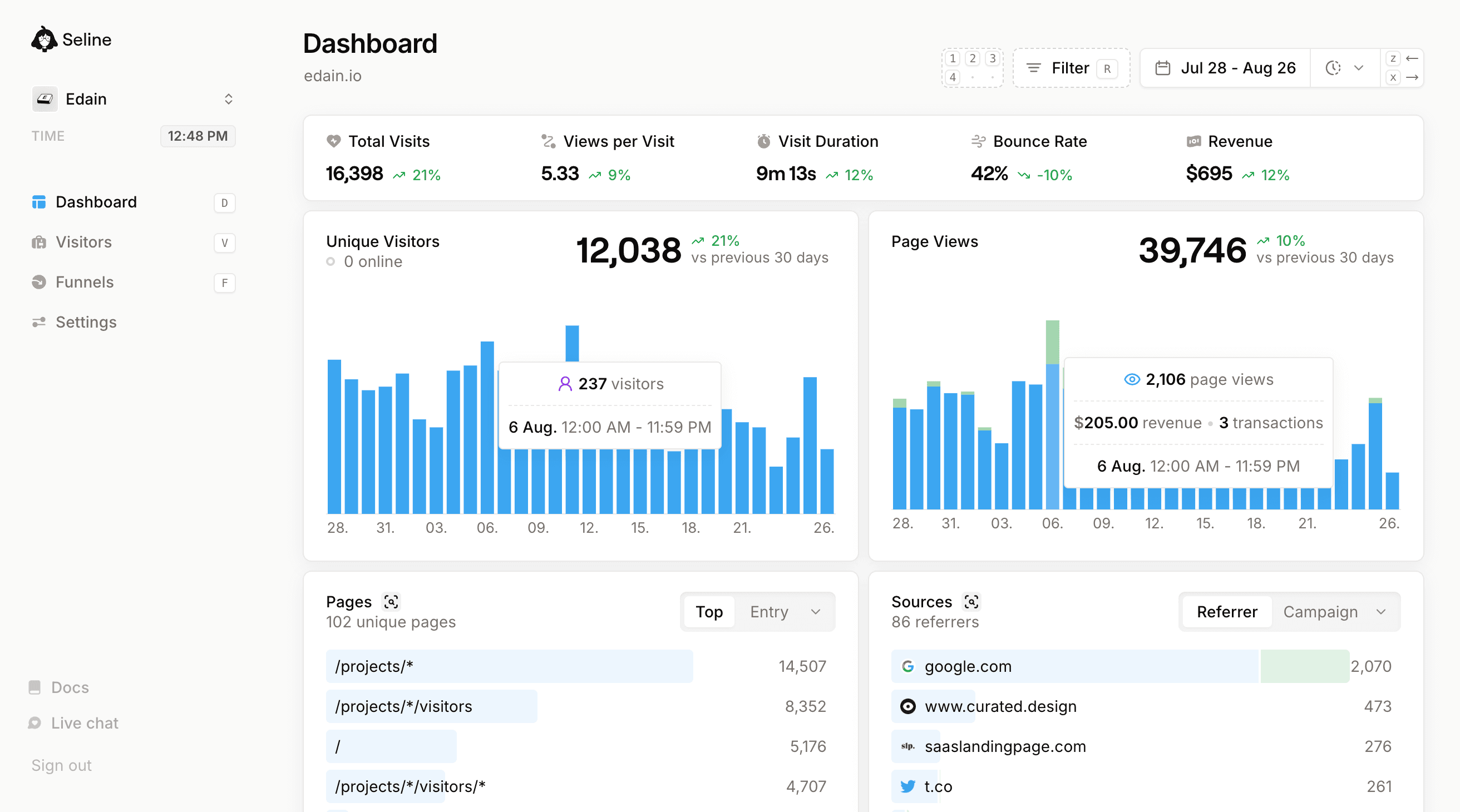
Out of the box, Seline works exactly like the other lightweight tools in this list. Add one script, open the dashboard, and you see traffic, referrers, top pages, and UTMs. No setup wizard, no report builder, no GA4-style learning curve. If that's all you need, you're done.
On speed and design, I cared about both. The dashboard is the fastest in this list: it loads instantly, feels snappy when you filter or switch views, and stays out of your way. It's also modern and clean, built recently from scratch, not a legacy interface patched over the years. Plausible and Fathom look fine, but they feel older. Seline is the one I'd actually want to open every day.
The extra features are there when you want them, not forced on you:
Optional, when you need more:
- Visitor journeys & profiles: See how individual users move through your site, where they drop off, and what they do before converting. You don't have to use this. It's there for SaaS teams who want it.
- Revenue analytics: Connect Stripe or Polar to tie revenue back to channels and pages. Skip it entirely if you're not tracking revenue yet.
- Live view: Watch visitor activity in real time during launches or campaigns.
- AI filtering: Ask questions in plain English ("visitors from the US in January") instead of building manual filters.
- Funnel analysis: Track multi-step conversion flows. Optional, like everything else above.
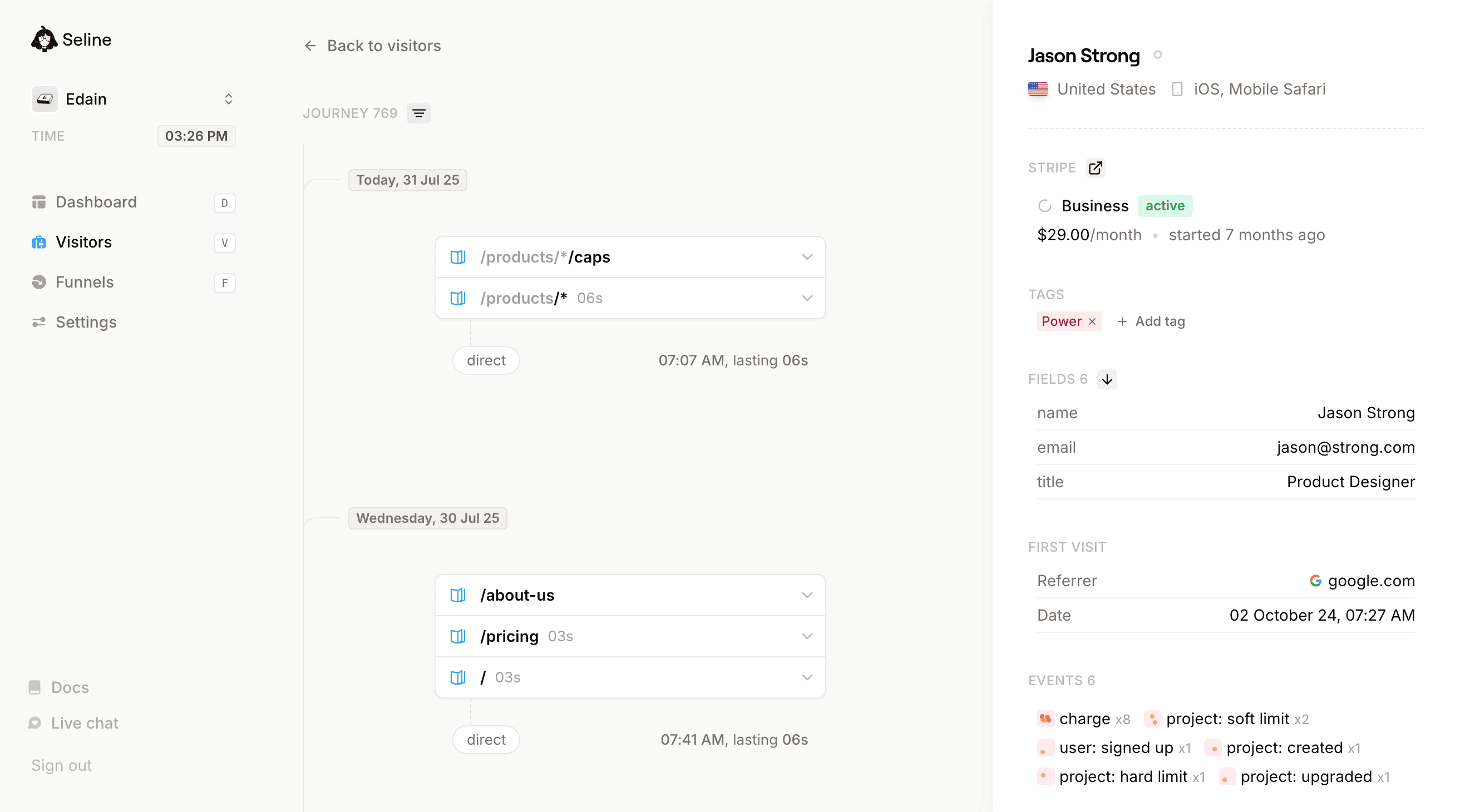
Seline is cookieless, GDPR-compliant, and runs on a lightweight script that won't slow your site down. Plans start at $9/month and scale with your traffic. There's a 7-day free trial with no credit card required.
Best for: Anyone who wants Plausible-level simplicity in a modern, fast interface, plus the option to go deeper later. Blogs, SaaS, indie projects.
Limitations: No self-hosted option. That's a deliberate trade-off. If you need to run analytics entirely on your own infrastructure, Plausible or Umami are better fits.
Get started with web analytics for free.
Sign up for Seline now - no credit card required. Cookieless, privacy-friendly, independent.
Get started
2. Plausible Analytics
Plausible is one of the most popular Google Analytics alternatives, and for good reason. It's open-source, privacy-focused, and genuinely easy to use.
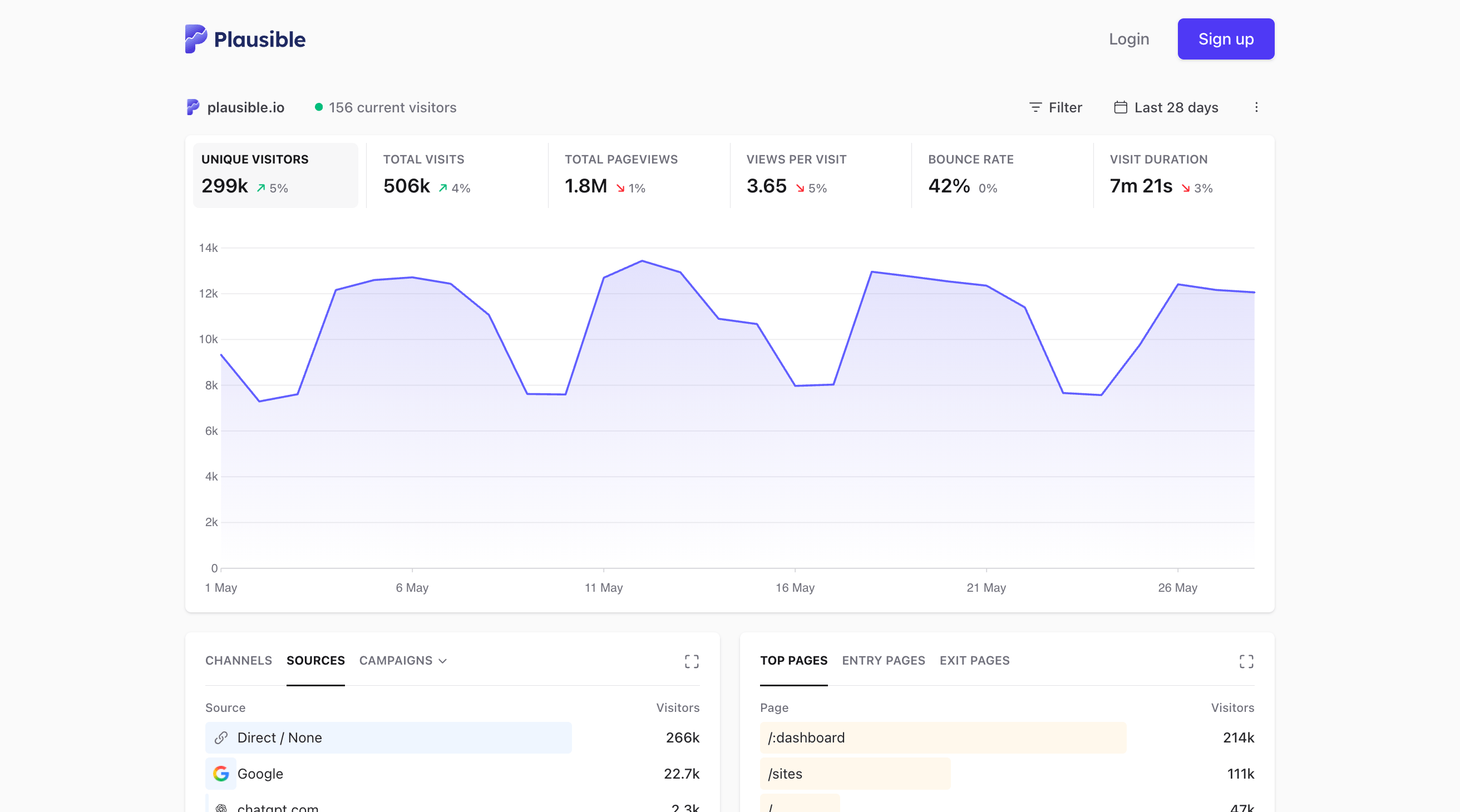
Plausible doesn't use cookies and doesn't collect personal data. Everything is aggregated and anonymous. The tracking script is under 1 KB, so your site stays fast.
Highlights:
- Fully open-source: inspect the code or self-host on your own server
- GDPR, CCPA, and PECR compliant out of the box
- UTM tracking, goal conversions, and revenue tracking
- Clean dashboard with traffic sources, top pages, and referrers
- Shared dashboards for clients or stakeholders
Best for: Privacy-conscious teams, developers who want open-source transparency, and anyone who prefers to self-host.
Limitations: No visitor-level profiles or journey tracking. Funnel analysis is basic compared to Seline or GA4. Self-hosting requires server maintenance.
3. Fathom Analytics
Fathom takes a "back to basics" approach. If GA4 feels like flying a cockpit when you just need a speedometer, Fathom is built for you.
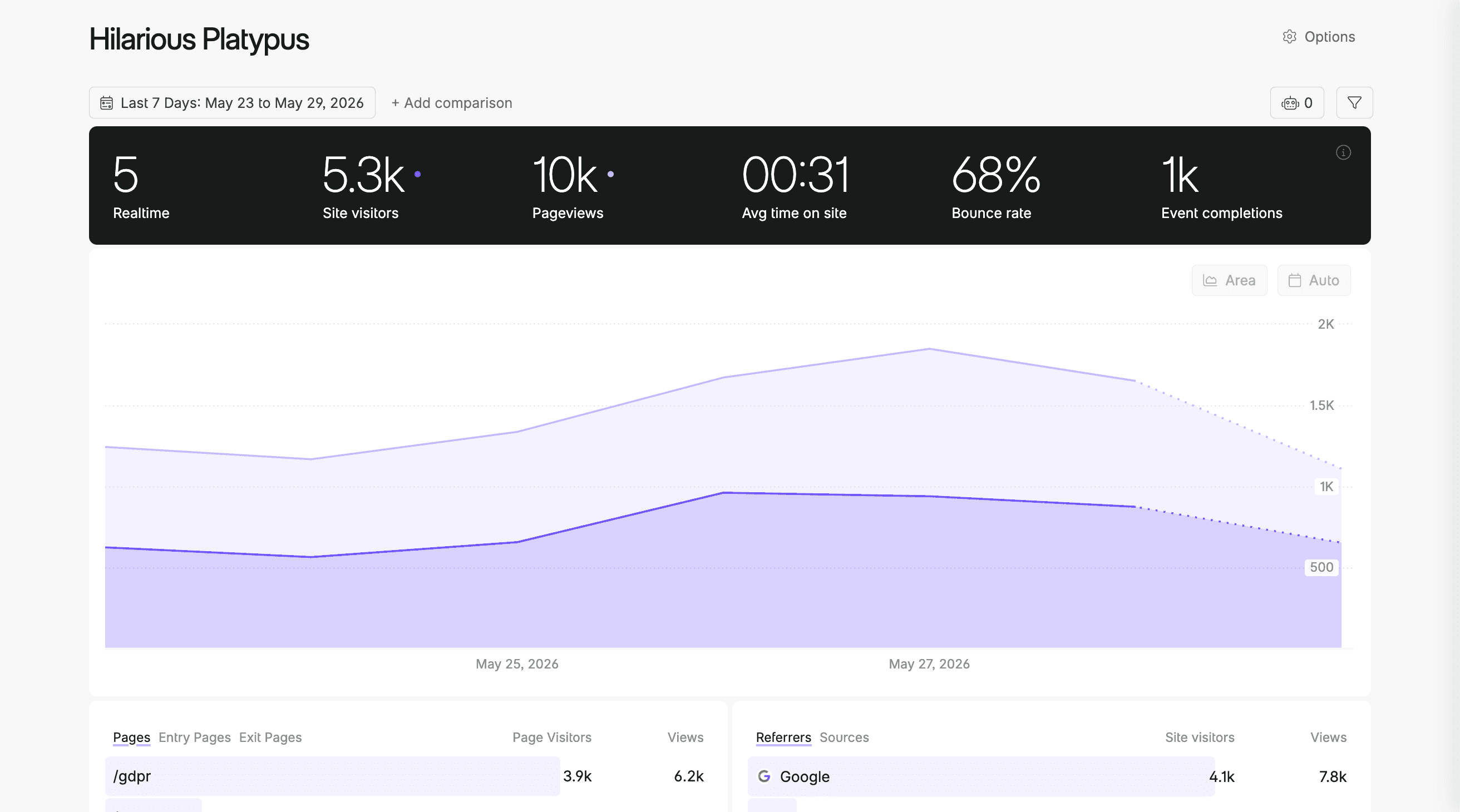
Fathom focuses on the essentials: page views, bounce rates, referrers, UTM campaigns, and custom events. The interface is clean, setup takes minutes, and the script is one of the fastest I've tested.
Highlights:
- Cookieless and GDPR-compliant, with no cookie banner needed
- Unlimited data retention (compare year-over-year without export headaches)
- Built-in bypass for ad blockers
- Simple, predictable pricing based on pageviews
- Multi-site management from one account
Best for: Content sites, publishers, and small businesses that want straightforward traffic reporting.
Limitations: Limited segmentation and no visitor-level tracking. The trial period is short if you need time to evaluate seasonal traffic. For a deeper comparison, see my Fathom vs Google Analytics guide.
4. Simple Analytics
Simple Analytics lives up to its name. It's a Netherlands-based, privacy-first tool that strips away the navigation layers you get with GA4 and shows traffic, referrers, and goals in a clean dashboard.
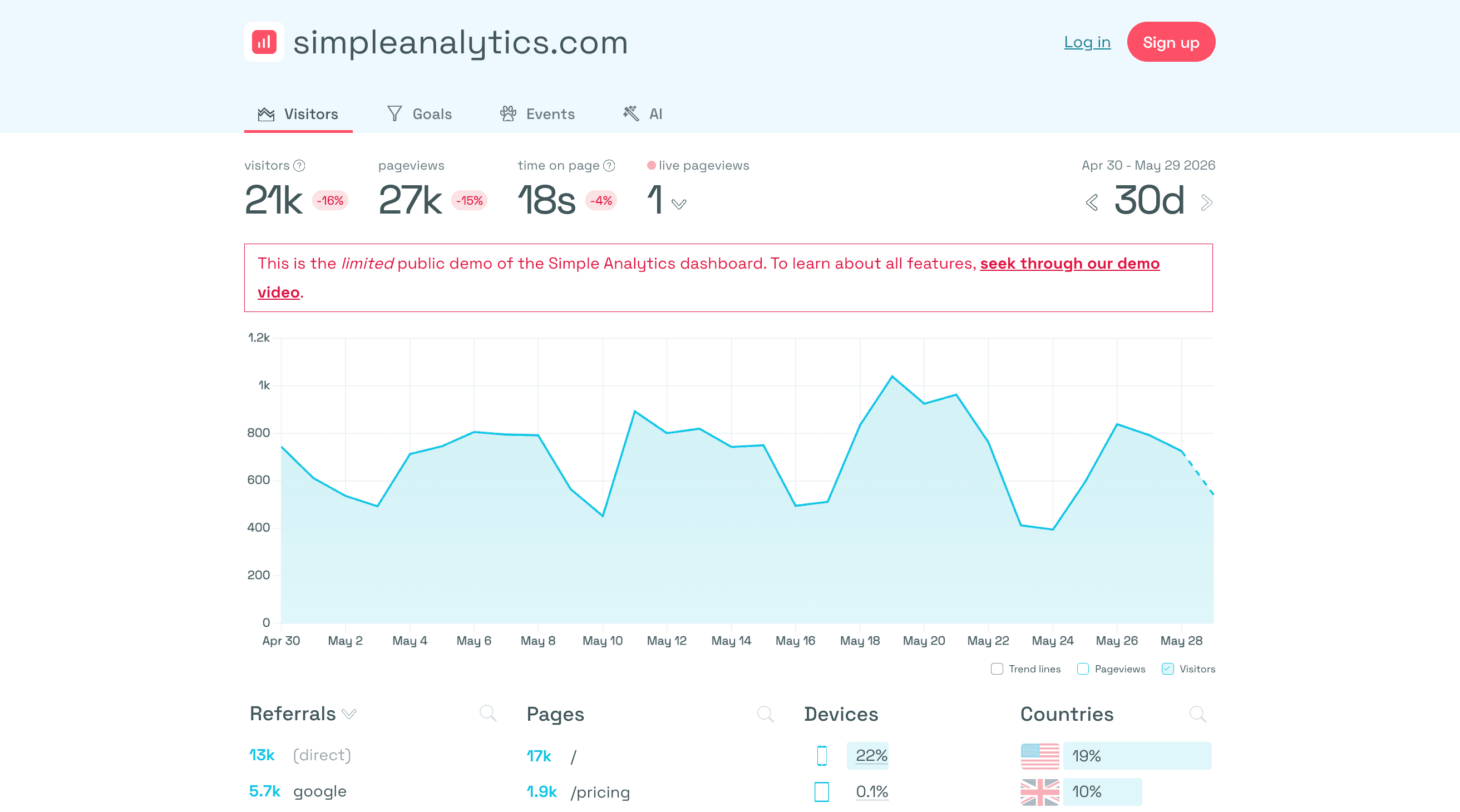
The interface is minimal and easy to scan. You get the core metrics without digging through nested reports or building custom views from scratch.
Highlights:
- 100% GDPR-compliant, no personal data stored
- You own your data. Nothing is shared or resold.
- Goal tracking and UTM support
- Clean, minimal interface
- Public stats page option for transparency
Best for: Teams that want a privacy-first analytics tool with a polished, no-clutter dashboard.
Limitations: Pricier than Plausible or Fathom at €20/month. Heavier than the name suggests once you start adding goals and custom events. No visitor journeys or deep funnel analysis.
5. Matomo
Matomo (formerly Piwik) is the most established open-source analytics platform. If data ownership is your top priority, it's worth a serious look.
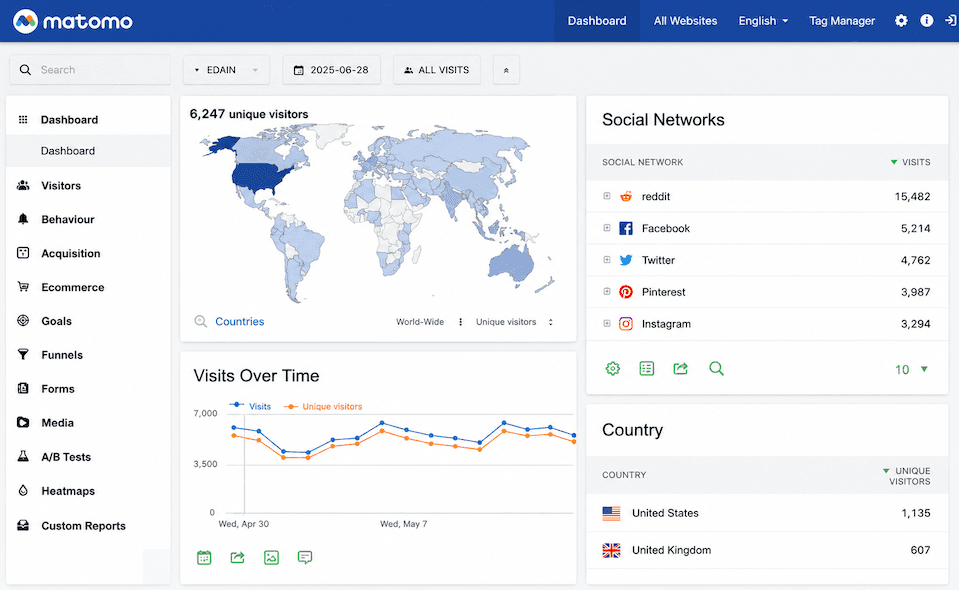
Matomo offers both cloud-hosted and self-hosted options. The self-hosted version is free and gives you complete control over your data. Nothing leaves your server unless you want it to.
Highlights:
- Full data ownership with self-hosted deployment
- Heatmaps, session recordings, and form analytics (paid add-ons)
- E-commerce tracking and conversion funnels
- GDPR-compliant with configurable privacy settings
- No data sampling: you see all your traffic
Best for: Enterprise teams, agencies, and organizations with strict data residency requirements.
Limitations: Steeper learning curve than Seline, Plausible, or Fathom. Self-hosting requires technical setup and ongoing maintenance. The interface feels more dated than newer alternatives.
6. Umami Analytics
Umami is an open-source, self-hosted analytics tool that's gained a loyal following among developers and indie builders.
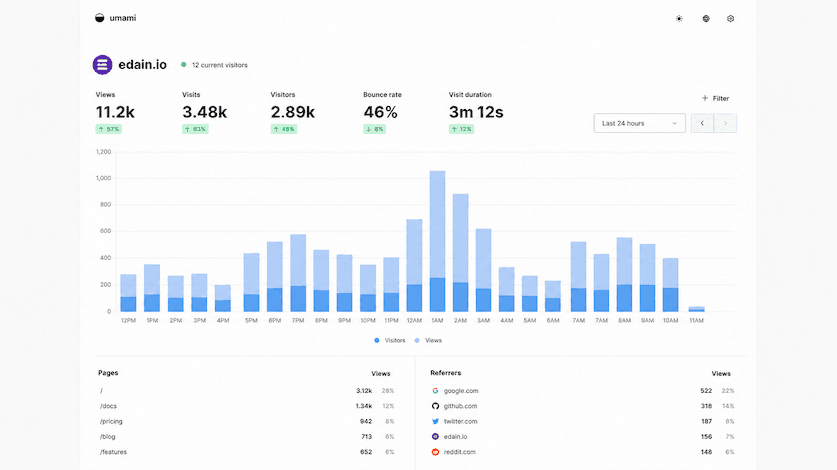
It's lightweight, privacy-friendly, and runs smoothly on modest hardware. Many teams switched from Plausible to Umami because it demands fewer server resources.
Highlights:
- Free and open-source: self-host on GitHub
- Cookieless tracking, GDPR-compliant
- Lightweight footprint that runs on small VPS instances
- Less likely to be blocked by ad blockers than GA4
- Custom events and basic reporting
Best for: Developers who want free, self-hosted analytics with minimal overhead.
Limitations: No funnels, revenue tracking, or advanced segmentation. Community-driven support only. UI is functional but less polished than paid alternatives.
7. Pirsch Analytics
Pirsch is a German-built analytics tool designed specifically for privacy compliance in the EU.
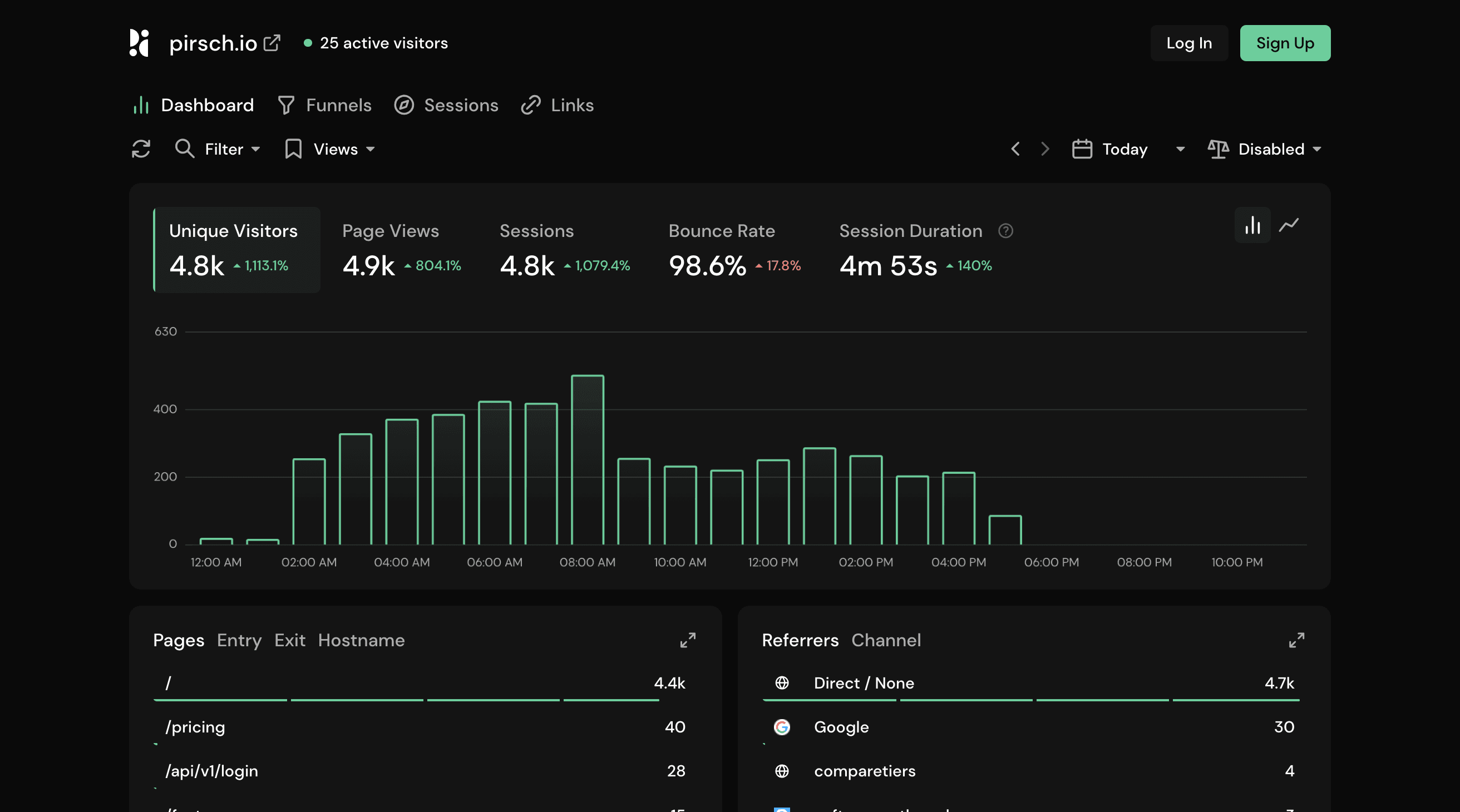
It uses a fingerprinting approach that doesn't rely on cookies, making it compliant with GDPR without consent banners in most cases.
Highlights:
- Built in Germany with EU data residency
- Cookieless tracking without personal data collection
- Session tracking and conversion goals
- Clean, readable dashboard
- Public dashboard sharing for transparency
Best for: EU-based businesses that need a compliance-first analytics tool with minimal legal overhead.
Limitations: Smaller feature set than Seline or Matomo. No revenue tracking or visitor profiles. Less well-known outside Europe.
8. GoatCounter
GoatCounter is the minimalist's choice. It's free, open-source, and intentionally limited, which is exactly the point.
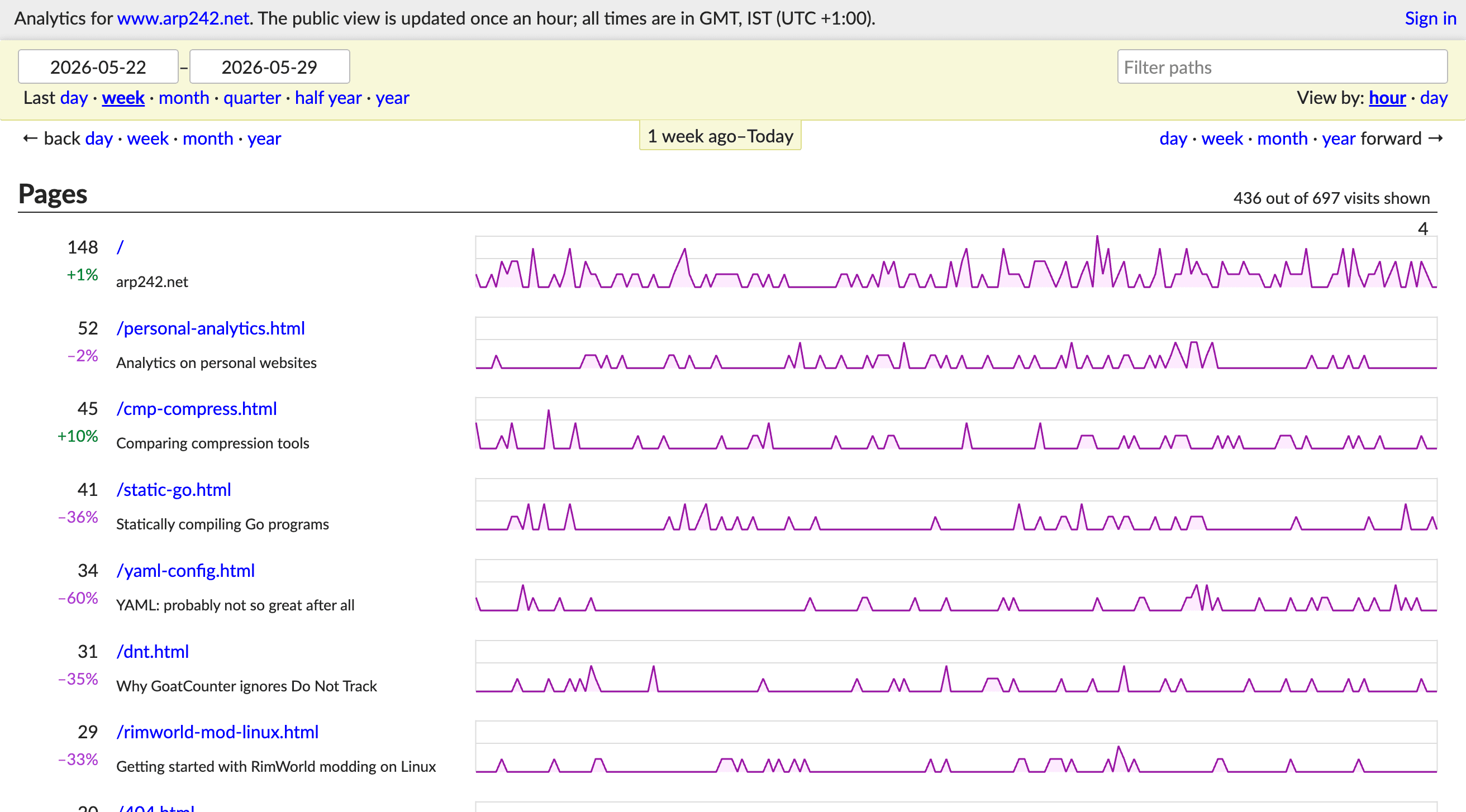
Created by Martin Tournoij (author of GoatCounter and other open-source tools), it tracks page views, referrers, and browsers. Nothing more.
Highlights:
- Completely free for reasonable traffic levels
- Open-source and self-hostable
- No cookies, no personal data, no tracking across sites
- Extremely lightweight script
- Simple setup: add one script tag and you're done
Best for: Personal blogs, hobby projects, and anyone who just wants to know "how many people visited today."
Limitations: No custom events, funnels, UTM tracking, or revenue data. Not suitable for business analytics.
9. Cloudflare Web Analytics
If your site already runs through Cloudflare, you get a free analytics option without installing anything extra. Cloudflare Web Analytics pulls traffic data from the edge, so it works even when client-side scripts get blocked.
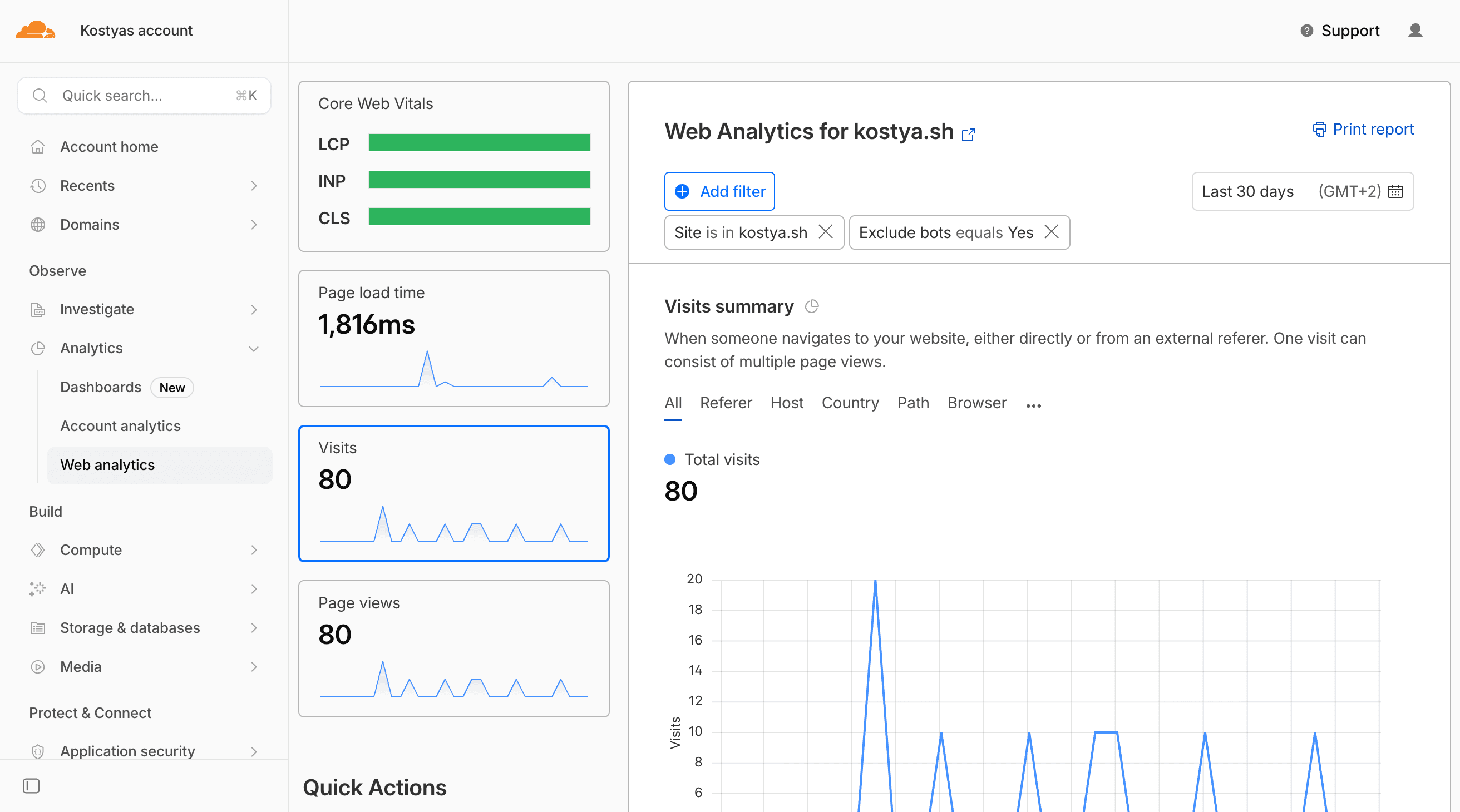
It's cookieless, privacy-friendly, and covers the basics: visits, page views, referrers, countries, and devices. For sites already proxied through Cloudflare, setup is essentially a toggle in the dashboard.
Highlights:
- Completely free on Cloudflare's free plan
- No JavaScript beacon required for core metrics (edge-based)
- Cookieless and privacy-respecting
- Not blocked by ad blockers since data comes from the CDN layer
- Simple dashboard inside your existing Cloudflare account
Best for: Sites already on Cloudflare that want free, low-maintenance traffic stats without adding another vendor.
Limitations: Requires Cloudflare. No custom events, funnels, UTM tracking, or revenue data. Metrics are more basic than dedicated analytics tools. You won't get visitor journeys or product-level insights.
10. Microsoft Clarity
Microsoft Clarity isn't a traditional analytics replacement. It's a free behavioral tool: heatmaps, session recordings, rage clicks, and scroll depth. Many teams pair it with a proper analytics tool rather than using it alone.
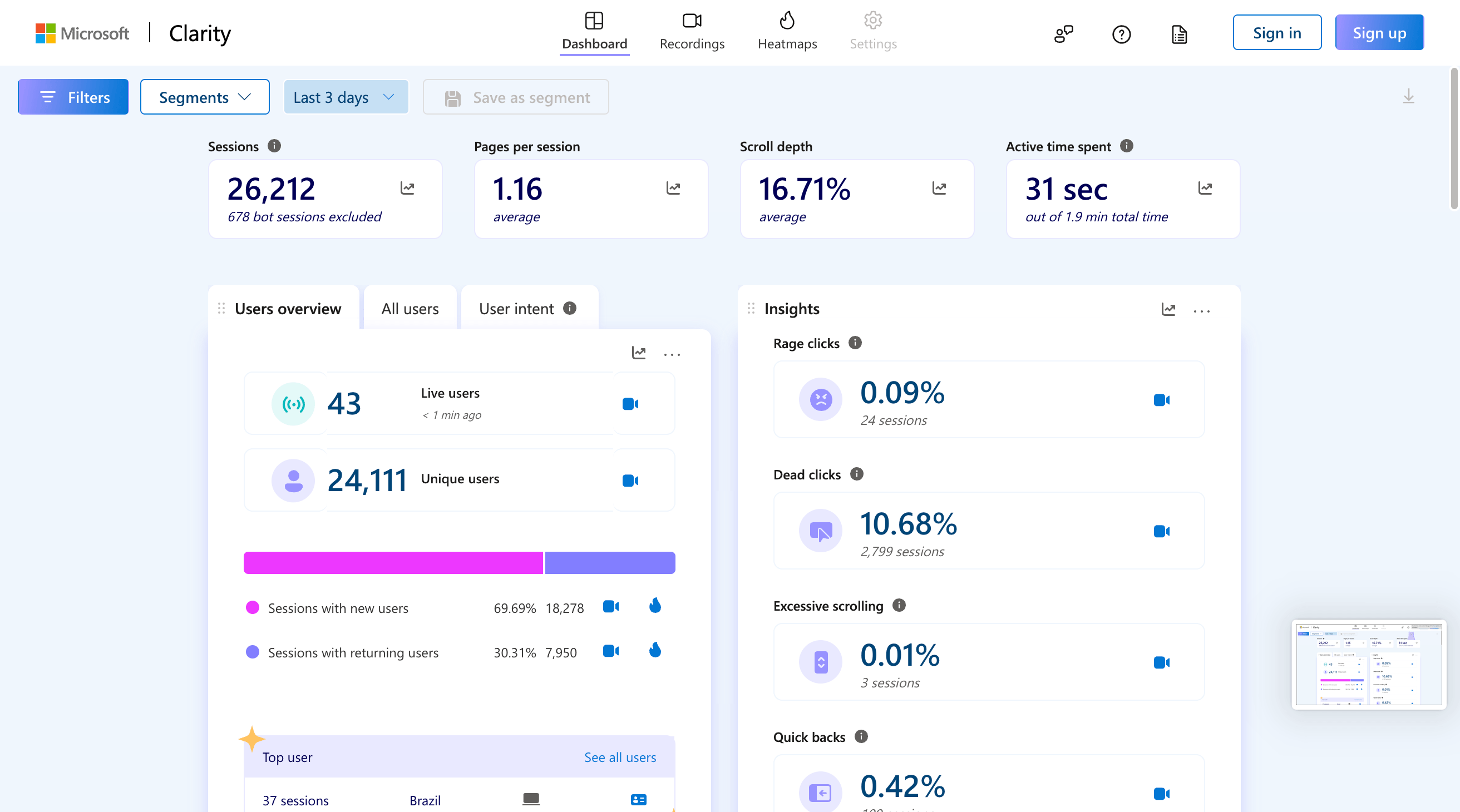
Clarity shows you how users interact with your pages, not just how many visited. Watch recordings of real sessions, see where people click, and spot UX problems that aggregate stats miss.
Highlights:
- Completely free, no traffic limits
- Heatmaps and session recordings out of the box
- Rage click and dead click detection
- Easy setup with a single script tag
- Integrates with GA4 if you still use both
Best for: Teams that want free UX insights, heatmaps, and session replays alongside their main analytics tool.
Limitations: Not a full GA4 replacement. No revenue tracking, funnels, or reliable UTM attribution. Data goes to Microsoft, which may raise privacy concerns for EU teams. Uses cookies, so you may need consent depending on your jurisdiction.
How to Choose the Right Google Analytics Alternative
The best tool depends on what you're optimizing for:
Choose Seline if you want the fastest, most modern dashboard in this list, with Plausible-level simplicity and optional journeys, revenue, and AI filtering for later.
Choose Plausible if open-source transparency or self-hosting matters most.
Choose Fathom if you want the simplest possible dashboard and long-term data retention.
Choose Simple Analytics if you want a privacy-first tool with a clean, minimal dashboard and straightforward goal tracking.
Choose Matomo if you need full data ownership and enterprise-level features.
Choose Umami if you want free, self-hosted analytics and you're comfortable managing your own server.
Choose Pirsch if EU compliance is your primary concern.
Choose GoatCounter if you run a personal site and just need basic pageview counts.
Choose Cloudflare Web Analytics if your site is already on Cloudflare and you want free, cookieless traffic stats with minimal setup.
Choose Microsoft Clarity if you want free heatmaps and session recordings to understand UX, ideally paired with a proper analytics tool like Seline.
For most teams leaving GA4, Seline is what I'd recommend. Same simplicity as Plausible on day one, but with the fastest dashboard and a UI that actually feels modern.
Frequently Asked Questions
What is the best free Google Analytics alternative?
Umami, GoatCounter, Cloudflare Web Analytics, and Microsoft Clarity are the best free options depending on your setup. Umami and GoatCounter are free if you self-host. Cloudflare Web Analytics is free if your site runs through Cloudflare. Clarity is free for heatmaps and recordings. Matomo is also free when self-hosted. For a hosted analytics solution, most privacy-first tools (including Seline) are paid, but Seline offers a 7-day free trial with no credit card required.
Are Google Analytics alternatives GDPR-compliant?
Most privacy-first alternatives are designed for GDPR compliance out of the box. They avoid cookies, don't collect personal data, and don't require consent banners in most jurisdictions. GA4 can be configured for compliance, but it requires more setup. See the GDPR-compliant analytics guide for the full checklist.
Can I migrate data from Google Analytics to another tool?
You can export historical data from GA4, but most alternatives won't import it directly. They start fresh from installation. The good news: setup takes minutes, and you'll have meaningful data within days. Focus on setting up the new tool before removing GA4 so you don't lose tracking during the transition.
Do Google Analytics alternatives work with ad blockers?
Many privacy-first tools are less likely to be blocked than GA4 because they don't use third-party cookies or known tracking patterns. Fathom includes a built-in bypass. Seline and Plausible use lightweight first-party scripts that ad blockers typically allow.
Is Google Analytics going away?
No. GA4 is actively maintained and remains free. But Universal Analytics was sunset in 2023, and many teams found the migration painful. Privacy regulations, cookie deprecation, and interface complexity are pushing teams toward simpler alternatives regardless of whether GA4 itself disappears.
Which Google Analytics alternative has the best funnel analysis?
Seline has the most accessible funnel analysis among privacy-first tools, and it's optional. Multi-step conversion tracking and visitor journey views are there when you need them, not on day one. Matomo also supports funnels but requires more setup. Plausible, Fathom, and Simple Analytics offer basic goal tracking but not full funnel visualization.
The Bottom Line
GA4 isn't dead. Plenty of sites will keep using it, and that's fine. But if you've opened the dashboard twice this month and still couldn't answer a basic question about your traffic, you're probably on the wrong tool.
That's the whole reason I built Seline. I wanted analytics that felt like Plausible on day one, with a UI I wouldn't dread opening, and the option to go deeper later without a migration project.
If you're in the same spot, start a 7-day free trial. Takes a few minutes to set up.